Formula 1 Betting in New Zealand 2026
 Available in US
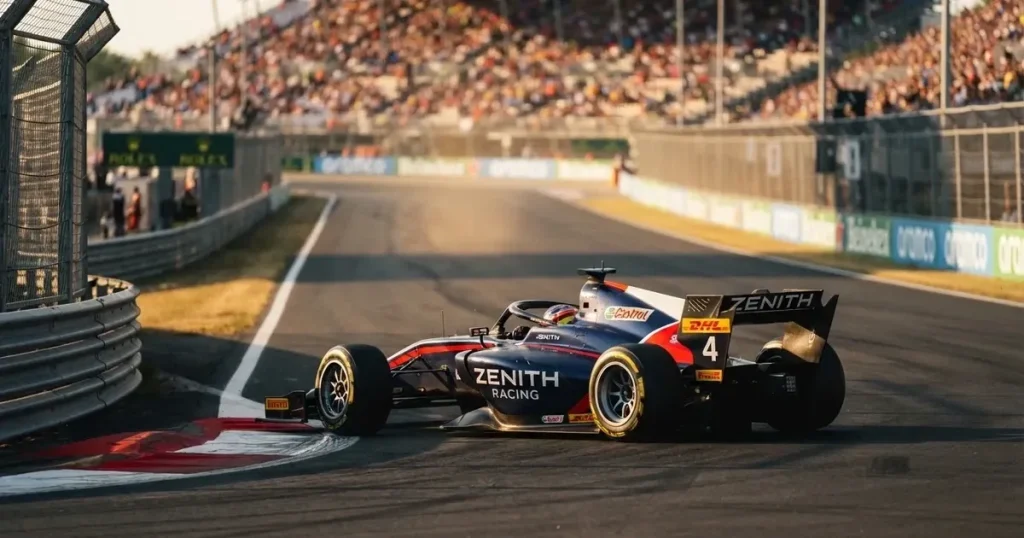
Formula 1 in New Zealand is a 23-race season spread across five continents, with a cost cap that nearly doubled over the off-season, six sprint weekends, and a fresh active-aerodynamics rulebook that rewrote how cars are set up. For a Kiwi punter the season sits inside a much smaller frame: two lawful brands, one regulator, and a market list shaped by the operator’s own terms rather than a licence register. The page below closes the gaps marketing never quite does — what a margin of 5% actually does to a payout, what a free bet really returns, and what changes once the only legal option sits beside nine brands that have no New Zealand licence behind them. Sources current as of October 30, 2026, checked against the Department of Internal Affairs’ published register and TAB New Zealand’s own terms.
Finding value in the 2026 F1 market
Where the value hides in a 24-race calendar
F1 is a thin market. Each weekend offers one race, one qualifying session, and a handful of practice sessions — and most of the betting volume on any given round is concentrated into a small number of head-to-head and podium markets. That shape rewards a different kind of work than a football coupon does, and it punishes the kind of work that wins on a Saturday sport. A punter who treats F1 as a stream of independent single-race bets will end the season having paid a margin twenty-three times and remembering maybe four of the results.
The useful frame is series-level rather than race-by-race. The Drivers’ Championship and the Constructors’ Championship are settled at the Abu Dhabi Grand Prix on 6 December 2026, and the price on a driver at the start of the season is a contract about how good that team looks across the whole year, not how the next race will go. The same is true of the Constructors’ market, where a single dominant car can carry both titles at once. The 2026 technical regulations — the removal of the MGU-H, the jump in MGU-K output from 160 bhp to 470 bhp, and the replacement of DRS with active aerodynamics — mean the cars at the front of Melbourne in March are unlikely to be the cars at the front of Abu Dhabi in December, and that uncertainty is exactly where the early prices carry the most value or the most trap.

Lando Norris arrives as the reigning Drivers’ Champion, and that frame matters. A champion’s price is short at the start of the season because the market knows what he did, and short odds mean thin margins for anyone backing him. The value, when there is value, sits one tier down: a driver priced for third or fourth in testing who the books have under-priced because last season’s data is stale. The 2026 season opened at Albert Park, Melbourne on 8 March 2026; the sprint events are China, Miami, Canada, Britain, the Netherlands and Singapore, and each one shifts the championship math a little further away from where it started.
A working bankroll on a sport that doesn’t run every week
F1 is not a weekly sport. A punter running a flat-stake model on every race will end the season with twenty-three settled bets, give or take a sprint, which is a small sample for any staking plan that depends on volume. The right unit of work is the race weekend, not the race, because qualifying markets and race markets are correlated: a car that locks out the front row on Saturday tends to control the race on Sunday, and a clean Saturday often removes the upside from backing the same driver on Sunday at a shorter price.

A practical pattern is to cap exposure at one staking unit per driver per round, and treat the championship outrights as a separate fund. The two are easy to confuse because the same names appear in both, but the time horizons are different. A driver who wins the championship pays out in December on a price struck in March; a driver who wins a race pays out on Sunday on a price struck that morning. Mixing the two on one bankroll flatters short-term results and hides the season-long cost of carrying a futures position that is going nowhere.
The temptation, every March, is to load up on the favourite because he is the favourite. The maths pushes back: a $10 bet at $1.50 returns $15, and the only way that bet has positive expected value is if the implied probability of 66.7% is actually lower than 66.7% once the bookmaker’s margin is stripped out. On a Drivers’ Championship market the favourite is rarely mispriced by enough to clear that bar, because the market is watched closely and the early limits are conservative. The mispricing shows up further down the list, where the books have less information and the limit is tighter.
Reading form without reading into it
Form in F1 is not form in football. A driver who finished fifth in Bahrain last year has, at most, a few races of evidence to draw on once the 2026 cars settle, and the cars themselves are different objects. A pre-season testing time is a weather report from a circuit the field has never run in this configuration: useful, not decisive. The trap is to treat testing pace as a forecast, when it is really a question — what does this team do at the first race it actually has to qualify for?
The honest read is that the only data older than the 2026 cars are the drivers and the engine manufacturers. Mercedes, Ferrari, Honda and the Audi works team have institutional knowledge; the new entrants do not. The cost cap rose from $135M to $215M for 2026, and that gap is real money, but how it is spent under the new rules is something nobody outside the team knows. The shape of the season is set by the cars, and the cars are a closed book until Australia.
Markets, odds and the language of the slip
What a Formula 1 betting slip actually offers
The Drivers’ Championship outright is the headline market: a bet on which driver tops the standings after the last race. It settles once, in December, on a price struck whenever the bet was placed. The Constructors’ Championship outright is the team-level equivalent, settled on the sum of both drivers’ points and what tends to be a tighter market because the field is half the size.
Race-level markets are the weekly work. The race winner market pays out on the driver who takes the chequered flag first. The podium finish market pays out if the driver finishes first, second or third. The podium each-way market splits the stake, half on the podium, half on the race winner at a fraction of the win price, which is the way a punter buys themselves a small consolation if the driver finishes third but not first. The head-to-head market matches two named drivers and pays out on which one finishes ahead of the other, regardless of where in the field that puts them. Qualifying markets settle on Saturday on the grid order, and fastest lap markets settle on the single fastest lap of the race, sometimes with the caveat that the driver has to finish in the top ten or fifteen to count.
Sprint weekend markets behave the same way, just twice in three days. A sprint race has its own race-winner market, its own qualifying on Friday, and a separate points haul that feeds into neither championship; treating a sprint as a mini-race is the right way to model it, and treating its result as a forecast for Sunday is the wrong way.
The each-way structure is the F1 form of insurance. A stake of $10 each-way at $11 for a podium finish is $5 on the win market and $5 on the place market at roughly a third of the price; a podium finish returns the win portion at the full $11 and the place portion at the place price, and a win pays both legs. The catch is that the each-way payout is never as generous as a straight bet because the place price is a discount, and a driver who finishes fourth — a place in everything but the market’s eyes — pays nothing.
How decimal odds translate to a payout
A decimal odds price of $3.50 means a $10 stake returns $35 if the bet wins: the $10 stake and $25 of profit. The stake is always returned on a win, which is the structural difference between decimal odds and the fractional odds that older New Zealand punters grew up with. A $10 bet at 5/2 fractional returns $35 in profit on a $10 stake; the same bet at $3.50 decimal returns $35 in total, profit included. The arithmetic is identical, the framing is different.
Combined bets multiply the prices. A multi with three legs at $2.10, $1.80 and $1.95 has a combined price of $2.10 × $1.80 × $1.95 = $7.37, and a $5 stake returns $36.85 if all three legs win. The catch is that every leg has to win; one loss takes the whole multi down, and a void on one leg usually drops that leg out at odds of $1.00 and lets the rest of the multi run. A same-race multi, sold under the trade name Same Game Multi, is the same structure with all legs from one event, and the kind of bet a bookmaker prices to a thinner margin than a multi drawn from different sports because the legs are correlated in ways the market can model.
The margin inside every price
Every price on an F1 betting slip carries a margin, and the margin is the cut the bookmaker keeps off every dollar bet, regardless of who wins. On a two-way market with decimal odds of 1.90 and 1.90, the implied probabilities are 1 ÷ 1.90 = 52.63% on each side, and the two probabilities sum to 105.26%. That 5.26-point gap above 100% is the bookmaker’s margin — the slice of every dollar bet that the bookmaker keeps on average across a large number of bets. A fair market, with no margin at all, might have the two sides sum to 100% exactly: 2.00 and 2.00, or 1.95 and 2.05 with no rounding. The bookmaker’s margin is the reason the prices never reach that.
A real race-winner market is not a two-way market. Twenty drivers can win a race in principle, even if a half-dozen are realistically in the hunt, and the prices on the longshots drag the margin up. The Drivers’ Championship outright is a different shape: the favourite sits at a short price, the second favourite is a little longer, and a tail of drivers at very long prices fills out the field. The margin on a championship market is usually higher than the margin on a race-winner market because the books are pricing more runners and the limit on each runner is tighter.
The practical rule is that the margin is the cost of betting at all, and the higher the margin, the more the punter needs to be right to come out ahead. A 5% margin on a Drivers’ Championship outright means the books are keeping five cents of every dollar bet across the season, and a punter who breaks even on the prices has still lost five cents on the dollar. A punter who picks winners at exactly the true probability comes out behind by the margin. A punter who picks winners better than the market comes out ahead by in whatever way their edge beats the margin, and the edge needed to clear 5% is larger than the edge needed to clear 3%.
The margin on a two-way market at $1.90 and $1.90 is a band, not a single figure: the calculation sits at about 5.26% on those exact numbers, and moves with every price change. The band that matters is the one the actual market sits in, not the one a single example produces.
The 2026 season: calendar, rules and what the rulebook changed
A 23-race calendar with a six-week tail
The 2026 FIA Formula One World Championship is the 77th running of the World Championship, with 23 Grands Prix and 11 teams — originally 24 races before the Saudi Arabian Grand Prix was cancelled. The season opened at the Australian Grand Prix in Albert Park, Melbourne on 8 March 2026 and is scheduled to close at the Abu Dhabi Grand Prix in Yas Marina Circuit on 6 December 2026. Six weekends carry sprint events: China, Miami, Canada, Britain, the Netherlands and Singapore. The sprints are their own races, with their own points, and a sprint result does not feed into the main race’s points haul; it yet feeds into the Drivers’ and Constructors’ Championships on a reduced scale.
The calendar’s shape is uneven in a way that matters. The early flyaway rounds — Australia, then the run into China, Japan and Bahrain — sit close together, and a strong start in Australia sets up a long run of similar circuits before the European leg opens. The European leg, from Imola through the summer break and into Monza and Baku, is the densest part of the season, and a Constructors’ Championship fight is usually decided somewhere in that stretch. The final run from Singapore to Abu Dhabi is a six-week tail where the championship math gets cleaner week by week, and a runaway leader is rarely caught in the last two or three rounds because the points gap is too wide.
The 2026 rulebook and what it cost the teams
The 2026 technical regulations are the largest reset of the F1 power unit and chassis in the turbo-hybrid era. The MGU-H has been removed, the MGU-K output has risen from 160 bhp to 470 bhp (350 kW), and the DRS system has been replaced with active aerodynamics. The cost cap rose from $135M to $215M, and the increase is roughly the size of a small team’s entire prior-season budget. The combination means the cars are more electric, more dependent on energy deployment, and built under a budget envelope that gives the bigger teams less of a structural advantage than they have had in the last few seasons.
The active aerodynamics rule, replacing DRS, is the change that shows up most in the racing. DRS was a single flap the trailing car is able to open in a designated zone; active aerodynamics is a more flexible system that lets the driver choose between modes, and the choice is meant to be strategic rather than a flat overtaking button. The implication for betting is that a DRS-dependent overtake is no longer a foregone conclusion, and a price built on last season’s DRS pattern understates the new system’s variance. The first few races of the season are the market’s chance to learn how active aerodynamics shapes the racing, and the early prices carry that uncertainty.
The cost cap rising to $215M is the change that shows up most in the Constructors’ Championship. A team that was running at the cap under the old rules has the same absolute budget, and a team that was running well under the cap has more headroom to spend. The midfield, where the cap matters most, is where the championship fights get decided, and the cap’s increase is the structural reason the field is expected to tighten in 2026.
Reigning champion and the shape of the field
Lando Norris is the reigning Formula One Drivers’ Champion into the 2026 season. The reigning champion’s price at the start of the year is a function of the team’s apparent pace in testing and the books’ prior on his ability to convert that pace into points. The market’s tendency to over-rate a reigning champion in the early rounds is well documented, and the price on the reigning champion in race one is often shorter than the same driver’s price in race five, once the field has settled.
The eleven teams in 2026 include the new Audi works entry and the Cadillac project that joins later in the cycle, and the new entrants are the largest source of pricing uncertainty in the championship markets. A new team has no prior data under the 2026 rules, and the books are pricing the team’s first season on the basis of testing pace, driver lineup and infrastructure. The price on a new-team driver in March is a guess; the price in October is a settled view. The value, when there is value, sits in the gap between the two.
How F1 betting works in practice
The mechanics of placing a bet
A bet on an F1 market is a contract: the punter stakes an amount, the bookmaker takes the other side at the displayed price, and the contract settles when the result is known. The mechanics are the same as on any sport, but the cadence is different. A football bet might sit open for two days between placement and kick-off; an F1 qualifying bet sits open for hours, and an F1 race-winner bet placed in the race is a different category of bet entirely.
Pre-match bets are placed before the race starts and are settled on the official classification. In-play or live bets are placed in the race, with prices updating as the race unfolds. A live market is a thinner market than a pre-match market: the books have less time to balance their book, the margin is wider, and the prices move sharply when something happens on track. A live bet on a safety car is, structurally, a bet that the next few laps look different from the last few, and the price reflects that uncertainty. The punter who backs a driver at $3.00 before a safety car and again at $2.20 after one is not betting twice on the same proposition; the second bet is a new bet at a new price, and the margin on the second bet is the margin the bookmaker is willing to give on a thinner market.
A cash-out feature lets the punter close a bet before the result is known, at a price the bookmaker sets in real time. The price on a cash-out is always worse than the price of laying the same bet on an exchange, where one exists, and the gap is the bookmaker’s charge for the convenience. A punter who cashes out a winning position before the race ends has locked in a smaller profit than waiting for the result might have paid, and the difference is the cost of the certainty. A punter who cashes out a losing position has crystallised a loss that perhaps recovered, and the cash-out price reflects the bookmaker’s view that it won’t.
A bet builder is a same-race multi: a single bet slip that combines several markets from one event into one price. The price is the product of the individual legs, minus the bookmaker’s margin on the combined product, and the combined margin is usually lower than the sum of the individual margins. The punter’s edge on a bet builder is the same edge they had on the individual legs priced separately, and the bet builder’s edge is the bookmaker’s reduced margin. A bet builder is a way for the punter and the bookmaker to share a margin discount, and the discount is the reason bet builders are pushed at the betting interface.
From stake to payout
A winning $10 bet at $4.50 returns $45 in total: the $10 stake and $35 of profit. The maths is the same on every market, but the framing changes the way the bet feels. A $10 bet at $4.50 looks like a $35-profit bet; a $35 bet at $1.30 looks like a $10.50-profit bet. The two bets have the same implied probability, near enough, and the same expected value under the same margin, but the first one feels like a punt and the second one feels like a sure thing. The feeling is wrong in both directions: the long shot is not better value just because the price is bigger, and the short shot is not safer just because the price is smaller.
A multi with three legs at $2.10, $1.80 and $1.95 has a combined price of $2.10 × $1.80 × $1.95 ≈ $7.37, and a $5 stake returns about $36.85 if all three legs win. The combined price is the product of the individual prices, and the combined margin is wider than any individual margin. A multi is structurally a worse proposition for the punter than a single, on the same selections at the same prices, because the margin compounds across legs. The multi’s appeal is that the headline price is large enough to feel like a real win, and the punter trades a structural disadvantage for a psychological one.
A free bet is a different contract. A $10 free bet at $4.50 returns $45 of profit on a win, and the $10 stake is not returned. The free bet’s value is the profit times the probability of winning, and the expected value of a free bet on a market with a 5% margin is the free-bet amount times the margin-adjusted edge. A free bet that is restricted to a minimum price of $1.50, for example, can only be placed on a market where the implied probability is 66.7% or shorter, and the value of the free bet depends on the prices the punter can actually use it on. The free bet looks like a gift on the betting slip; the terms behind it determine whether it is.
Reading the result
A bet on a race winner settles on the official classification at the end of the race. A bet on a podium finish settles on the official classification, and a driver classified outside the top three is not a podium finisher regardless of where they crossed the line. A bet on fastest lap settles on the single fastest lap recorded in the race, sometimes with a condition that the driver has to be classified in the points or in the top ten. A bet on qualifying settles on the grid order after qualifying, not on the practice sessions, and a grid penalty applied after qualifying moves the driver back on the grid but does not usually change the settled result of a qualifying market, which is the order the cars took the chequered flag in qualifying.
The official classification is the bookmaker’s reference, and the bookmaker’s terms say so in plain language. The classification is not the same as the live timing, the broadcaster’s graphic or the punter’s eye, and a bet that looks like it has won on the live feed can be a loss on the official result if a time penalty is applied in the hours after the race. The punter who reads the result off the broadcast has read the wrong document, and the punter who reads the official result has read the right one.
How the 10 F1 bookmakers compare for Kiwis
The first two operators are TAB and Betcha, the two online brands of TAB New Zealand and the only providers lawfully offering racing and sports betting to people in New Zealand since 28 June 2025. The remaining eight are offshore brands that have no New Zealand licence behind them, and the page describes them as reference points because New Zealand players meet them in their feeds and on comparison sites. Each operator is rated on the same criteria, the offshore group is flagged as not licensed in New Zealand, and the two groups are never merged, because merging them may imply that an offshore brand has the same standing under New Zealand law as TAB and Betcha, which it does not.
| Brand | New Zealand status | What the operator’s own terms say on the key points |
|---|---|---|
| TAB | TAB NZ brand (the only provider lawfully offering racing and sports betting to people in New Zealand under section 74AAA of the Racing Industry Act 2020) | New Zealand licence, no separate register; markets shaped by TAB NZ’s own terms; safer-gambling tools in app (deposit limits, time-outs, self-exclusion) |
| Betcha | TAB NZ brand (the only provider lawfully offering racing and sports betting to people in New Zealand under section 74AAA) | New Zealand licence, no separate register; markets shaped by TAB NZ’s own terms; safer-gambling tools in app |
| Roobet | Not licensed in New Zealand | Curaçao licence (OGL/2024/687/0427); markets shaped by the operator’s own terms; no New Zealand harm-minimisation framework applies |
| Spinbara | Not licensed in New Zealand | Markets shaped by the operator’s own terms; first-deposit and welcome offers described on the English site |
| Sportaza | Not licensed in New Zealand | Anjouan licence (ALSI-202606064-FI2); cash out, Bet Builder, multiples, Asian lines, interval markets |
| Thunderpick | Not licensed in New Zealand | Curaçao licence (OGL/2024/677/0722); esports-first, sportsbook covers Champions League to NFL, cash-out feature |
| Rooster.bet | Not licensed in New Zealand | Tobique Gaming Commission e-gaming licence (No. 0000002); Live, Sports Promotions, Results, Schedule, E-sports, Predictions; six odds formats |
| Glorion | Not licensed in New Zealand | Markets shaped by the operator’s own terms; pre-match, live, virtual sports, horse racing, esports, entertainment markets |
| RoyalistPlay | Not licensed in New Zealand | Tobique Gaming Commission e-gaming licence (No. 0000002); live betting, sports promotions, results, schedule |
| BetAlright | Not licensed in New Zealand | Markets shaped by the operator’s own terms; football, tennis, table tennis, basketball, ice hockey, American football, baseball; live betting and virtual sports |
TAB — the lawful default
TAB is the older of the two TAB NZ online brands, and the one most Kiwi punters over a certain age grew up with. The market list comes from TAB NZ’s own terms rather than a published register, and the published betting rules cover Win, Place, Each Way, Quinella, Exacta, Trifecta, First Four, Double, Treble, Daily Double, Running Double, Quaddie and Big6 on the racing side, with fixed-odds and tote (pool) bets across the catalogue. Live betting is listed in the app, and the published app carries a 17+ App Store age rating while stating that customers must be 18 or over to bet.
The framing TAB presents is the framing TAB’s terms allow. Because TAB is the only lawful option, the page does not need to argue that TAB is the right choice on regulatory grounds — the regulator has already made that argument. The page does need to say what TAB is, in the words TAB uses about itself, and where the published terms leave a question open. Verdict: the lawful default, with the market list shaped by the operator’s own terms rather than a published register, and the safer-gambling framework that the regulator requires. A solid pick for a punter seeking New Zealand harm-minimisation tools and a local complaints route, and who is willing to take the market list TAB offers rather than the longer lists an offshore book can publish.
Betcha — the newer TAB NZ brand
Betcha is the newer of the two TAB NZ online brands, first released on the New Zealand App Store on 6 August 2024 and published by Entain New Zealand Limited. The market list runs in parallel to TAB’s: horse, greyhound and harness racing, rugby, NRL, MMA and UFC, NBA, NFL, tennis, cricket, football, motorsports and esports. The app is the product Entain has built under a 25-year partnership signed in 2023, and the partnership gives Entain a 50/50 share of gross profits with at least $150m a year going to TAB NZ for the first five years, with Entain pledging a one-off $100m payment to the racing sector.
The product framing is different from TAB’s, and that is the point. Betcha is the brand TAB NZ launched to reach a younger, more app-native audience, and the difference shows up in the interface rather than the market list. The safer-gambling tools are the same across the two brands, and an exclusion on TAB applies on Betcha as well, because the two brands sit on the same operator. Verdict: the same operator as TAB in a different wrapper, with a product aimed at a different audience. An ideal selection for a punter who wants the TAB NZ market list and a newer interface, and who is comfortable betting with the same operator under a different brand name.
Roobet — the offshore reference
Roobet’s sportsbook covers soccer, basketball, tennis, Counter-Strike, FIFA, baseball, ice hockey, MMA and table tennis, and the brand’s terms require players to be 18 or older. The licence Roobet names is a Curaçao licence (OGL/2024/687/0427), held by Raw Entertainment B.V., and the Curaçao framework gives no right to take bets from people in New Zealand. The brand’s own product pages do not show a New Zealand harm-minimisation framework, and the New Zealand Department of Internal Affairs has told unlicensed providers serving New Zealand to withdraw with immediate effect.
Roobet is on the page because New Zealand players meet it, and the page describes what Roobet offers in its own terms rather than the framing Roobet’s marketing might prefer. Verdict: a Curaçao-licensed sportsbook with a market list that does not include F1 as a listed category in the same way TAB and Betcha do, and no New Zealand complaints route. We advise punters who have decided to bet offshore despite the regulator’s position to note the absence of a New Zealand harm-minimisation framework and the limits on what an offshore operator can recover in a dispute.
Spinbara — the offer-led offshore book
Spinbara advertises a first-deposit bonus of 100% up to EUR 100 and a sport crypto welcome bonus of 100% up to 200 USDT on its English site, alongside a casino welcome bonus of 100% up to EUR 500 plus 200 free spins. The brand names no licence that applies in New Zealand, and the New Zealand Department of Internal Affairs has told unlicensed providers serving New Zealand to withdraw. The market list is shaped by the operator’s own terms.
The framing Spinbara uses is offer-led, and the offers are described here as the brand’s own site describes them. Verdict: an offshore book with a promotional offer list, no New Zealand licence and no New Zealand harm-minimisation framework. This remains an option for a punter comparing promotional offers across the offshore group, provided they focus on the terms rather than the headlines.
Sportaza — the feature-led offshore book
Sportaza offers cash out before an event or market is finalised, a Bet Builder (if one selection is void the whole betslip is void), multiples, Asian lines and interval markets in 1, 5, 10 or 15 minute ranges. The licence the brand names is an Anjouan licence (ALSI-202606064-FI2), which gives no right to take bets from people in New Zealand. The product framing is feature-led, and the features are described in the brand’s own terms.
The page lists Sportaza because the feature set is the kind of feature set Kiwi punters compare when they look at offshore books. Verdict: an Anjouan-licensed sportsbook with a feature set that includes cash out and Bet Builder, and no New Zealand licence behind it.
Thunderpick — the esports-led offshore book
Thunderpick is esports-first, covering CS2, League of Legends, Dota 2 and Valorant, and the sportsbook offers a cash-out feature and markets from the Champions League to the NFL. The licence the brand names is a Curaçao licence (OGL/2024/677/0722), held by Paloma Media B.V., which gives no right to take bets from people in New Zealand. The framing is esports-led, and the product pages describe the esports coverage in more detail than the sportsbook coverage.
The page lists Thunderpick because the esports coverage is the kind of coverage that matters to a punter weighing the offshore group. Verdict: a Curaçao-licensed sportsbook with an esports-first product, and no New Zealand licence behind it.
Rooster.bet — the format-flexible offshore book
Rooster.bet’s sportsbook has Live, Sports Promotions, Results, Schedule, E-sports and Predictions sections and shows odds in six formats. The licence the brand names is a Tobique Gaming Commission e-gaming licence (No. 0000002), held by Novatrix SRL, which gives no right to take bets from people in New Zealand. The product framing is format-flexible, and the six odds formats are a feature for a punter who reads prices in something other than decimal.
Verdict: a Tobique-licensed sportsbook with six odds formats. Punters comparing odds-format options across offshore books must weigh the regulatory cost.
Glorion — the catalogue-wide offshore book
Glorion offers pre-match and live betting, virtual sports, horse racing and esports, with markets grouped into popular, niche, indoor and outdoor sports plus entertainment events such as award shows and elections. The brand names no licence that applies in New Zealand. The product framing is catalogue-wide, and the entertainment markets are the kind of markets that do not exist on TAB or Betcha.
Verdict: an offshore book with a catalogue that extends into entertainment and virtual sports. This serves as an alternative for a punter comparing catalogue breadth across the offshore group.
RoyalistPlay — the schedule-led offshore book
RoyalistPlay’s sportsbook offers live betting, sports promotions, results and a schedule, with football, basketball, tennis, handball, ice hockey, volleyball and table tennis among the top sports, plus separate e-sports and Predictions sections. The licence the brand names is a Tobique Gaming Commission e-gaming licence (No. 0000002), held by Novatrix SRL, which gives no right to take bets from people in New Zealand. The product framing is schedule-led, and the schedule is a feature for a punter who plans bets around a fixture list.
Verdict: a Tobique-licensed sportsbook with a schedule-led interface. This is a point of comparison for a punter assessing fixture-planning tools among offshore options.
BetAlright — the mainstream-sport offshore book
Betalright’s sportsbook covers football, tennis, table tennis, basketball, ice hockey, American football and baseball, with Live Betting and Virtual Sports sections. The brand names no licence that applies in New Zealand. The framing is mainstream-sport, and the sports list is the kind of sports list that sits on most offshore books.
Verdict: an offshore book with a mainstream-sports focus. Punters comparing sports coverage across offshore books may use this as a reference point.
What F1 betting looks like in New Zealand
The monopoly and what it changed
The Racing Industry Amendment Act 2025 inserted section 74AAA into the Racing Industry Act 2020, and the section took effect on 28 June 2025. The section says that no person other than TAB NZ may offer racing betting, sports betting or other racing or sports betting to a person in New Zealand, regardless of where that person is resident or incorporated. The Department of Internal Affairs told unlicensed providers serving New Zealand to withdraw with immediate effect, and the change is the legal reason the operator list on this page is two New Zealand brands and eight offshore ones, rather than ten brands competing in a New Zealand market.
The law does not block New Zealand residents from accessing offshore bookmaker websites. The law puts liability on the offshore operator for taking bets from a person in New Zealand, and a separate provision, section 19(4) of the Gambling Act 2003 as inserted in 2025, says an individual may not be convicted for placing a bet with an offshore operator in breach of section 74AAA. The result is a regime where the operator carries the regulatory risk and the player carries the practical risk of dealing with an operator outside the New Zealand harm-minimisation framework. The Department of Internal Affairs warns that overseas operators may be in jurisdictions with minimal consumer safeguards, may not return unspent credits and may not pay out large wins.
The Online Casino Gambling Act 2026 licenses online casino gambling in New Zealand, and TAB New Zealand has won the right to apply for a casino licence. The casino licence is a separate permit from the betting monopoly, and the page does not extend the betting monopoly into a casino claim. Greyhound racing is closing in stages from 1 August 2026, and from that date offshore operators may not take bets on greyhound races either.
What may be bet on, and what may not
The Racing Industry Act 2020 allows TAB NZ to take racing bets and sports bets, and the catalogue of what may be bet on comes from TAB NZ’s own terms. TAB NZ takes fixed-odds bets and tote (pool) bets; the racing side of the catalogue covers Win, Place, Each Way, Quinella, Exacta, Trifecta, First Four, Double, Treble, Daily Double, Running Double, Quaddie and Big6, and the sports side covers the sports TAB NZ chooses to list. The published betting rules define the markets and the settlement rules, and a bet on a market TAB NZ has not published is not a bet the law recognises.
The question of whether esports betting is “sports betting” under the Racing Industry Act is not established in the published material the page draws on, and the question of whether virtual sport is “sports betting” or “casino gambling” has been partly answered by the 2026 online casino law, which treats virtual sport as casino gambling. Bets on politics and novelty markets are not established in the same way, and the page does not extend the catalogue into markets the published material does not cover. No statutory restriction on in-play markets was found, and TAB NZ lists live betting in its app, but a punt on an in-play market is a bet on a market TAB NZ has chosen to offer in-play, and the catalogue is TAB NZ’s call.
There is no lawful New Zealand betting exchange, and spread betting is outside TAB NZ’s sports-betting definition. The page does not discuss a New Zealand exchange because none exists in the published material, and it does not discuss spread betting because TAB NZ does not offer it under the sports-betting permit.
Tax, levies and what the player pays
A recreational gambler’s winnings in New Zealand are generally not taxable under Inland Revenue guidance, and prize money from TAB horse, dog and trotting races is not taxable. A person who bets as a business is a different case, and the general information above is not tax advice; the page says this once, here, and does not repeat it. The operator side is structured differently. TAB NZ pays the Problem Gambling Levy of 0.74%, in force from 1 July 2025 to 30 June 2028. Overseas operators supplying New Zealand residents pay an online gambling duty of 12% of profits since 1 July 2024, rising to 16% from 1 January 2027. A duty being payable does not make an offer lawful under section 74AAA, and the page does not write that an offshore brand is “licensed” because it pays tax.
The point-of-consumption charge on offshore racing and sports bets ceased on 30 June 2026. The charge was the mechanism by which the government collected revenue from offshore operators serving New Zealand, and its cessation does not change the underlying prohibition under section 74AAA.
Advertising, bonuses and the line the ASA draws
The Advertising Standards Authority’s Gambling Advertising Code applies to betting advertisements in New Zealand. The code says ads must not target children (under 14) or young people (14 to under 18), judged by context, appeal and expected audience, with a 25% audience threshold as the test for “significant” where accurate data exists. Ads must not encourage harm, must be truthful, and must make terms available. The code does not contain a New Zealand equivalent of the United Kingdom’s “whistle-to-whistle” ban on betting advertising around sports broadcasts, and no published New Zealand rule was found that does.
TAB NZ runs “bonus bets” promotions. No New Zealand rule on bet-bonus size or wagering terms was found, and the page quotes the offers in TAB NZ’s own terms rather than in a generic frame. The page does not print a promo code, because the offer is described in the operator’s own terms and the operator’s site is where the offer is redeemed.
Safer gambling in the F1 context
The tools TAB NZ puts in the punter’s hand
TAB NZ lists deposit limits, time-outs and self-exclusion in its app, and an exclusion applies across both TAB NZ brands — TAB and Betcha. The free Gambling Helpline (0800 654 655, text 8006) is the published number, and Safer Gambling Aotearoa is the published service. The age for TAB NZ betting is 18, and betting under 18 is an offence under section 89 of the Racing Industry Act 2020. The land-based casino age is 20, and the two ages are never merged on the page.
The framework is operator-level rather than national, and the reason is structural. There is no single national online-betting exclusion register; the register that the 2026 online casino law will require is for online casinos only. A punter who excludes themselves from TAB is excluded from both TAB and Betcha, and a punter who excludes themselves from an offshore book is excluded from that book only. The page says this once, here.
The offshore group’s harm-minimisation gap
The offshore bookmakers in the comparison do not operate under the New Zealand harm-minimisation framework. The Curaçao, Anjouan and Tobique licences those brands name are licences in other jurisdictions, and the consumer safeguards in those jurisdictions are not the consumer safeguards the New Zealand Department of Internal Affairs requires. The DIA’s published warning is that overseas operators may be in jurisdictions with minimal consumer safeguards, may not return unspent credits and may not pay out large wins. The page does not argue that an offshore brand is unsafe in a way an onshore brand is not; the page describes the regulatory difference, and the regulatory difference is the one the punter needs to know about.
When a session needs to stop
A punter who has set a deposit limit and reached it has reached the limit the punter set, and the limit is the test. A punter who has set a time-out and the time-out is active cannot place a bet on TAB or Betcha, and the time-out is the test. A punter who has self-excluded has self-excluded, and the exclusion is the test. The Gambling Helpline is the published number for a punter who is past the limit and the time-out and the exclusion, and the page names the number once and does not repeat it in every section.
The F1 season is twenty-three races long, and the temptation to chase a losing position across a full season is real. A punter who backs Norris in March and finds him off the pace in April has two choices: cut the position or carry it. Carrying it across a full season means staking through the bad weekends, and the bad weekends are where the bankroll goes if the bankroll is the only thing that matters. The maths is the maths, and the safer-gambling tools are the tools the regulator has put in place to make the maths a choice rather than a compulsion.
Frequently asked questions
Can you bet on F1 in New Zealand?
Yes, through TAB and Betcha, the two online brands of TAB NZ, the only providers lawfully offering racing and sports betting to people in New Zealand under section 74AAA of the Racing Industry Act 2020. The market list is shaped by TAB NZ’s own published betting rules, and the catalogue includes race-winner, podium, head-to-head, qualifying and championship markets on the 2026 FIA Formula One World Championship.
Can you bet on individual F1 races?
Yes, on a per-race basis through TAB and Betcha. Race-winner, podium finish, head-to-head, qualifying and fastest-lap markets are the standard race-level markets, and sprint weekends carry an additional set of markets for the sprint race itself. Each market settles on the official FIA classification, and the published betting rules define the settlement conditions.
Can you bet on Formula 1 in general, not just on TAB?
The lawful route is TAB and Betcha. Offshore bookmakers take bets from people in New Zealand in breach of New Zealand law, and the Department of Internal Affairs has told unlicensed providers to withdraw. An offshore book has no New Zealand harm-minimisation framework behind it, no New Zealand complaints route, and limits on what the regulator can do if a dispute arises.
Which bookmaker may lawfully take sports and racing bets in New Zealand?
TAB NZ, through its two online brands TAB and Betcha. Section 74AAA of the Racing Industry Act 2020, in force since 28 June 2025, makes TAB NZ the only provider lawfully offering racing and sports betting to people in New Zealand, and the Department of Internal Affairs has told unlicensed providers to withdraw with immediate effect.
How is the return on a bet worked out from the stake and the odds?
The return on a winning bet is the stake multiplied by the decimal odds: a $10 stake at $4.50 returns $45 in total, including the $10 stake. The net profit is the stake multiplied by (odds minus 1): the same $10 bet at $4.50 returns $35 of profit. A multi multiplies the prices of the legs together, and the stake is multiplied by the combined price.
What is the bookmaker’s margin and how can it be seen in the odds?
The margin is the slice of every dollar bet that the bookmaker keeps on average across a large number of bets, and it shows up in the prices as the gap above 100% when the implied probabilities of all outcomes are added together. A two-way market at $1.90 and $1.90 has implied probabilities of 52.63% on each side, summing to 105.26%, and the 5.26-point gap is the margin. A real F1 market has more than two outcomes, and the margin on a championship outright is usually higher than the margin on a two-way head-to-head.
Tennis, golf & more – kiwicricketodds
Content created by the «kiwicricketodds» team
