Betting on the UFC from New Zealand: prices, apps and what the over-round actually takes
 Available in US

The legal set-up around UFC betting in New Zealand has been a one-writer story since 28 June 2025. Only TAB NZ, through its two online brands, may take racing and sports bets from a person in New Zealand, and that includes the UFC. Everything else a New Zealand punter meets online — Curaçao skins, Anjouan licences, soft-money welcome packs — is offering the same product to the same buyer from outside the only framework that gives the bet any local recourse. What follows is the cost picture for a punter who wants to bet the UFC from a New Zealand address: the apps that take the bet, the markets offered, the way prices are built, the operators that pitch themselves at the same customer and the honest arithmetic of what a typical two-way line actually pays the bookmaker.
Data current as of October 30, 2026; licences and operator status verified against the Department of Internal Affairs register and operator terms pages.
What a UFC betting app actually does in New Zealand
A UFC betting app here is a thin slice of a racing product. TAB NZ’s apps — “TAB – Racing & Sports Betting” and Betcha — carry the UFC inside a sportsbook whose centre of gravity is horse racing, harness and greyhound racing, with rugby, cricket and the All Blacks sitting one or two taps further down. The UFC page is a sub-menu of the sports tab, not a destination of its own. That shape matters for anyone who treats a UFC betting app the way American or Australian punters do: the same screen has racing form, Jockey Challenge tools and Blackbook features running beside it.
The TAB NZ app, published on the New Zealand App Store under the seller name New Zealand Racing Board and first released on 8 September 2014, covers horse and harness racing, rugby union and rugby league and the wider sports menu, with pre-match and live betting built in. It carries a 17+ age rating, while the operator’s own rules say customers must be 18 or over to bet. Betcha, the newer of the two online brands, was first released on 6 August 2024 and is published by Entain New Zealand Limited; it is the lighter, mobile-first half of the same monopoly, aimed at younger sports punters who do not want the racing furniture. Both sit on iOS; an Android build ships alongside each through the standard Android storefront.
A useful way to picture the apps: a UFC bet is a tab inside a racing business. Trackside live race streaming with in-app betting, racing form tools, Blackbook notes and a Jockey Challenge sit next to the UFC markets on TAB NZ; Betcha strips most of that back to keep the sport menu front and centre. Both apps share a single TAB NZ wallet, the same deposit limits, the same time-out and self-exclusion controls and the same withdrawal plumbing, because both are operated by TAB NZ under its long-running Entain partnership. A punter who switches between them does not switch bookmakers; they switch skins.
What runs on the touchscreen and what does not
Touchscreen first, browser second. Both TAB NZ brands were built around the app and the mobile browser; the desktop experience is functional rather than central, and live in-play markets for UFC fights pop into the app well before they appear through the wider web menu. In-play pricing on a UFC card usually goes live shortly after the undercard’s first bout and stays live through the main event; the over-round on a typical two-way market tightens as volume arrives, which the next section covers in full.
Push notifications are the channel that matters most outside the fight window — line movement on a moneyline favourite, a method-of-victory market opening, a same-game multi the operator’s traders have priced into the bet slip. Cash-out is built into both apps and surfaces whenever the bet slip has a market with a live price on the opposite side. Browser users get the same markets and cash-out, just slower; the app is the live-betting instrument, the browser is the check.
Tablets split the experience oddly. On a phone-sized screen the bet slip, the market tree and the live price ladder all fit together; on a tablet the same screen has more dead space and a few market groups collapse. Live streaming of UFC events arrives inside the app for selected cards under the operator’s broadcast deals; for cards without a feed the fight still prices live — just without the picture.
Strategy, predictions and what the market actually thinks
“Strategy” for a UFC punter is mostly bankroll discipline dressed up. The fights close in three rounds or five; a method-of-victory market only prices correctly after a fighter has shown he can be finished; in-play lines on a UFC fight swing wider than the market for almost any team sport. A punter who treats UFC markets like Premier League moneyline markets tends to over-bet on a single round of pre-fight pricing and watch a live swing take half the edge they thought they had.
Tipsters and prediction sites proliferate in this niche because they are cheap to produce and UFC fight cards come thick and fast. The spread runs from independent analysts who break down tape on each fighter’s striking accuracy and takedown defence to social accounts that run a single pick per card with a hot take. None of that turns the market. Lines on a UFC main event open several weeks out and sharpen through fight week; by fight night, the price the bookmaker and the sharp money have agreed on is usually within a few decimal places of where the closing line sits.
Across most UFC cards, pre-fight value tends to sit on the underdog in championship bouts and on the favourite closer to fight night, once sharp money has tightened the price. This happens because championship fights attract casual betting volume on the champion’s name, which inflates favourite pricing early on. By fight night, the line usually corrects. A punter targeting the favourite finds better value by waiting; a punter backing the underdog gains an edge by betting early.
Prediction services that charge monthly fees mostly repackage what an experienced UFC watcher already knows — split-strike percentages, takedown defence rate, recent finishes, the weight-cut history of each fighter. The genuinely useful summary sits inside the public record: UFC’s own statistics pages, the fighters’ recorded finishes on a cage-by-cage basis, and the judges’ scorecards for full-decision fights. A subscription tipster who runs five or fewer picks per week is repackaging the same numbers; a service that runs ten or more picks is padding volume.
A bankroll frame that fits the UFC calendar
UFC events arrive most weekends of the year; numbered cards are monthly, Fight Nights fill the gaps. That density is the trap. A punter who flattens a fixed unit across every card bleeds slowly into the book’s margin; a punter who bets only on cards where they have a read on at least half the fights runs a smaller, sharper book. Two rules separate the two.
First, fix a unit at a percentage of bankroll, not a dollar number. The percentage that survives variance on a UFC schedule — where underdogs win on average one fight in three — is roughly 1.5 to 2 per cent of bankroll per bet. Anything bigger, and a bad run of three fight nights erodes a fifth of the bank.
Second, with parlays and same-game multis, the unit size needs to halve. A three-leg UFC multi at 6.00 pays 6x but wins roughly once in nine attempts; the effective return is closer to 5.4 once the book’s cumulative margin is factored in. Betting two legs at 3.50 each, rather than three at 2.20 each, trades a smaller payout for a better statistical probability. UFC markets favour singles and shorter combinations; long accumulators primarily serve the bookmaker.
UFC odds, bet types and how a UFC price is built
UFC betting in New Zealand mirrors the global menu of UFC markets, with decimal prices. The most common bet types, and the way the price reads, are worth slowing down on, because they are exactly where the bookmaker’s margin lives.
A UFC moneyline is a two-way market on who wins the fight. The price shows the decimal return on a $1 stake: $2.50 on a favourite means a $10 stake returns $25 ($15 of profit). A two-way over-round on a tight moneyline of $1.90 / $1.90 looks fair but returns $19 on a $20 stake across both outcomes if the bookmaker pays out on each — and the bookmaker does not, because the over-round is baked in. The mathematics of this is the calculation the page returns to in the next section.
Method of victory is the market a UFC punter quickly learns. Win by KO/TKO, win by submission, win by decision, draw/no-contest — three or four ways depending on whether the bookmaker lists draw as its own runner. The over-round on a method-of-victory market is wider than on the moneyline because each leg carries more uncertainty. A $4.00 line on a KO finish for a knockout artist looks attractive; the next leg, a submission finish, sits at $7.00; a decision finish sits at $3.50. Sum the implied probabilities of all three and the total runs to roughly 1.10, not 1.00, which means the bookmaker keeps about 9 per cent of every dollar across the whole market.
Over/under rounds is a totals market in disguise. The line on a UFC card usually opens at 1.5 rounds and moves toward 2.5 as fight week sharpens. The price reads like any other total: $1.91 over 1.5 rounds, $1.91 under. The over-round sits at the standard 4 to 5 per cent the book’s pricing engine puts on totals — narrower than method-of-victory, wider than a tight moneyline on a known favourite. Going the distance (the fight reaches the final bell) is its own market on the bigger cards.
Same-game multis and fight-night multis are where the book recoups the most margin in the fewest clicks. A multi of three fights at $2.20, $1.80 and $2.50 — conservative UFC prices — multiplies into $9.90, but the effective price after the over-round on each leg is closer to $7.50. A punter who thinks they are getting $9.90 is getting $7.50, and the difference is the cumulative slice on each leg.
In-play, cash-out and the price the screen shows after the bell
In-play UFC prices swing wide and fast. The first round of a fight typically runs 20 to 30 ticks tighter than the pre-fight moneyline because volume is light and the bookmaker is cautious on the live exposure. By the second round, the price has either softened on the man ahead or hardened on the man behind; the live line is the punters’ view of who is winning plus the over-round.
Cash-out on a UFC bet lets a punter close the position before the fight settles. The cash-out price the book offers is the live moneyline on the same selection minus a haircut of 5 to 12 per cent depending on the operator and the fight. A punter who placed a $50 bet on a $3.00 underdog pre-fight and the live moneyline after round one is $1.60 will see a cash-out offer somewhere around $70 — the rough fair value of the position at that price. Whether to take it depends on whether the punter thinks the live line is right; it almost never is, but the cost of being wrong is the fight.
A worked example on a tight UFC line
Take a UFC main event where the book lists the favourite at $1.90 and the underdog at $1.90. The decimal conversion is straightforward; the over-round is the more interesting number.
Total implied probability = 1/1.90 + 1/1.90 = 0.5263 + 0.5263 = 1.0526. That is 105.26 per cent of one fair outcome across two fair outcomes. The bookmaker’s margin, written as over-round, is the 5.26 per cent above fair — typically called a margin of about 5 per cent on a balanced book, somewhere in the 4-to-6 per cent band once the line is sharp. A punter who backs both sides of this market at $100 each has risked $200 to win $190, and the $10 gap is the book’s gross take from this market, before the cost of pricing it.
The shape matters as much as the number. A market at 5 per cent margin on a $100 bet on each side returns $190 and costs the punter $10, or 5 per cent of turnover. A market at 10 per cent margin on the same structure returns $180 and costs $20, or 10 per cent. The difference between 5 and 10 per cent compounds across a season of UFC cards. The page returns to this calculation in the worked example below.
UFC fights, events and what the schedule looks like
The UFC’s own calendar rules the betting calendar. Numbered events in 2026 run monthly — UFC 312, UFC 313 and so on — with Fight Nights filling the remaining Saturdays. By 2026 the promotion had held over 750 events since the first card on 12 November 1993 in Denver, and the schedule as research records it points to UFC 334 (Gane vs. Hokit) on 14 November 2026 at Madison Square Garden, New York City, and UFC 335 (Oliveira vs. Lopes) on 12 December 2026 at T-Mobile Arena, Las Vegas.
The structure of a UFC event shapes what a punter can bet on. A Fight Night typically runs 12 to 14 bouts, ranging from four to six fights on the main card with the rest on the prelims. Numbered events run 13 to 15 bouts, with a five-round main event and, for pay-per-views, a five-round co-main. The five-round structure matters for round totals and method-of-victory markets: a five-round fight priced at 1.5 rounds under is a fundamentally different bet from a three-round fight priced the same way.
Championship fights are scheduled for a maximum of five rounds; non-title main events are also five rounds; other bouts are three rounds. Each round is a maximum of five minutes with one minute’s rest between rounds; that is the structure bet types like “win in round 2” and “over 1.5 rounds” sit on. UFC bouts can be won by submission, knockout, technical knockout, judges’ decision (unanimous, majority, split or technical) or disqualification; a bout can also be ruled a no contest.
The UFC carries eight men’s and three women’s divisions, with each weight class producing its own title picture. A punter who follows one weight class closely will see title fights two or three times a year and contender bouts monthly; the deeper the division the more betting volume the book carries on it.
The fighting fundamentals a punter has to internalise
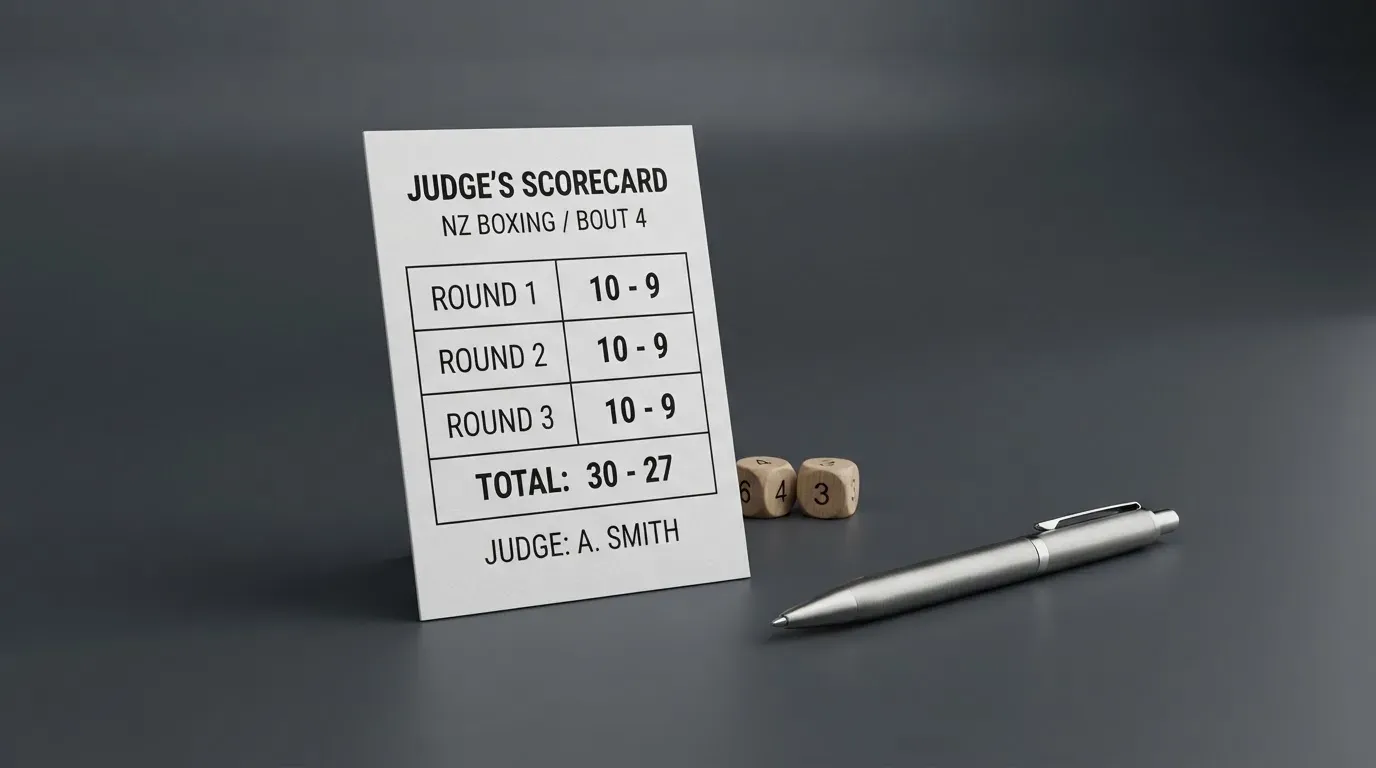
Three fundamentals determine most of what a UFC punter needs to know. First, the ten-point must system: three judges score each round, the winner receiving 10 points and the loser 9 or fewer. 10-8 is typical for dominant rounds; 10-7 is rare but possible for a one-sided round with a near-finish. Second, if a UFC title fight ends in a draw, the defending champion retains the title — meaning betting the draw on a championship fight is not the same bet as betting the draw on a non-title fight. Third, no contest is a real outcome: a fouled-out fighter who cannot continue produces a no-contest ruling, and the book refunds stakes on method-of-victory markets.

These structures shape the prices as much as the lines. A championship fight at $2.40 favourite / $1.60 underdog is sharper than a three-round prelim at $1.45 favourite / $2.65 underdog — the championship fights carry tighter margins because volume is heavier. A punter who knows this can lean toward the bigger fights for value, with the important caveat that the favourite is also where casual money concentrates.
The ten brands a New Zealand UFC punter actually sees
The New Zealand UFC betting market functions as a one-operator monopoly under the law, though ten operators are visible in practice. TAB and Betcha are the only channels through which a New Zealand punter can place a bet with a locally licensed bookmaker. The remaining eight brands seen in search results and on affiliate sites operate under licences that grant them no right to accept bets from anyone in New Zealand. The comparison below addresses this split: the two legitimate brands under the monopoly and the eight others marketed to local players.
The angle here is cost — what the offer costs the punter in real money. A New Zealand punter weighing where to place a UFC bet needs to weigh three things that are not the same across these ten brands: the legal standing of the bet, the menu of UFC markets offered, and the price of those markets. The eight offshore brands pitch more markets, more generous welcome packs and (sometimes) sharper prices than the TAB NZ brands. None of that matters if the bet has no New Zealand recourse and the operator is breaking section 74AAA of the Racing Industry Act 2020 by taking it.
The table below outlines each brand’s legal status in New Zealand and what its terms specify regarding costs. The third column reflects the operator’s published information; this is not a recommendation, and punters are advised to review the specific operator terms prior to placing any bet.
Operator comparison: New Zealand status and what the terms say
| Brand | New Zealand status | What the operator’s terms state |
|---|---|---|
| TAB | TAB NZ online brand | Racing and sports betting app under TAB New Zealand; UFC markets listed under the sports tab; full TAB NZ safer-gambling tools (deposit limits, time-outs, self-exclusion); 18+ only |
| Betcha | TAB NZ online brand | New Zealand racing and sports betting app published by Entain New Zealand Limited; same TAB NZ wallet, deposit and withdrawal plumbing; 18+ only |
| Rabona | not licensed in New Zealand | Curaçao-licensed sportsbook; UFC moneyline, method-of-victory and totals markets listed; deposit-gated welcome pack; no New Zealand complaints route |
| RoyalistPlay | not licensed in New Zealand | Tobique Gaming Commission e-gaming licence (No. 0000002), holder Novatrix SRL; sportsbook offers live betting, sports promotions, results and a schedule across the major combat sports including UFC |
| BillyBets | not licensed in New Zealand | Casino and sportsbook under one account; combat sports including UFC covered with pre-match and live markets; no New Zealand licence |
| Winz.io | not licensed in New Zealand | Anjouan and Tobique licences, holder Novatrix SRL; separate Sportsbook T&C, Sports Rules and Bonus Terms pages; UFC markets carried |
| 22Bet | not licensed in New Zealand | Curaçao licence (8048/JAZ), holder TechSolutions Group N.V.; 30+ market types per event, including UFC moneyline, totals and method-of-victory |
| Sportaza | not licensed in New Zealand | Anjouan licence (ALSI-202606064-FI2); cash-out before settle, Bet Builder, multiples, Asian lines and interval markets across UFC events |
| Thunderpick | not licensed in New Zealand | Curaçao licence (OGL/2024/677/0722), holder Paloma Media B.V.; esports-first brand with a UFC sportsbook attached; cash-out on UFC markets |
| BetNinja | not licensed in New Zealand | Union of the Comoros licence; casino and sportsbook under one account; 100% sports match offer on first deposit |
The wider context for this table is below.
TAB and Betcha — and what “same operator” actually means for cost
TAB and Betcha are the two online brands of TAB New Zealand, run operationally by Entain New Zealand under a 25-year agreement signed in 2023. The partnership gives Entain a 50/50 share of gross profits with at least NZ$150 million a year going to TAB NZ for the first five years, and a one-off $100 million payment to the racing sector. The two brands are not rivals; they are two skins on the same wallet.
For a punter weighing cost, the practical difference is in the offer menu, not the underlying price. TAB carries the racing side full-strength — Trackside streaming, form, Blackbook, Jockey Challenge, the racing-specific promotions — with UFC as one of many sports. Betcha is positioned lighter, with sport and racing both on screen and the racing furniture stripped back. Prices on UFC markets are the same because they are the same bookmaker, and the welcome terms on offer are the brand’s only meaningful operational divergence.
The single-wallet structure means a punter who self-excludes under TAB’s safer-gambling tools is excluded across Betcha as well. The deposit-limit, time-out and self-exclusion controls apply to both brands. That integrated protection is the practical advantage a TAB NZ punter has over a punter betting with one of the eight offshore brands — no offshore brand offers New Zealand’s harm-minimisation tools, and no offshore brand connects to the Gambling Helpline or Safer Gambling Aotearoa in any way the operator can be made to honour.
The eight offshore brands and what their offers actually cost
The eight offshore brands in the comparison above each carry a Curaçao, Anjouan, Tobique or Union of the Comoros licence. None of those licences authorise taking bets from a person in New Zealand; the New Zealand framework makes that offer unlawful on the operator’s side, not on the player’s side (section 19(4) of the Gambling Act 2003, inserted in 2025, prevents a player from being convicted for using an offshore operator). What the licence does give the operator is the right to take bets from elsewhere, and what it gives the punter is a bet with no New Zealand recourse.
The cost picture is straightforward. Offshore brands typically run wider UFC market menus — method-of-victory in more depth, round totals at finer granularity, more live in-play legs — and they fund that with higher margins and welcome-pack conditions. A 100 per cent match on first deposit looks generous; it carries a wagering requirement that requires the punter to turn the bonus over a fixed number of times at a minimum price before they can withdraw. The effective cost of clearing an offer like Betninja’s 100 per cent sports match up to EUR 100 sits somewhere between 8 and 12 per cent of the bonus value, depending on which markets the punter plays and how cleanly the wagering requirement converts. That is a high price for the same UFC moneyline the TAB NZ brands price at a tighter margin.
The wider market point is that an offer is never free. The eight offshore brands each have a wagering requirement, a minimum odds clause and a deadline; reading them carefully is the difference between a bonus that lands and one that traps the bonus in the account. The next few operator write-ups unpack what each brand publishes on these points, and where the brand’s own terms leave a gap that the punter has to fill with their own check.
Rabona — the sixth Soft2Bet sportsbook and a familiar shape
Rabona launched on 23 December 2019 as the sixth online sportsbook of the Soft2Bet group. It carries a Curaçao licence, runs a deposit-gated welcome pack and lists UFC under a sports menu that also covers football, basketball, tennis and the usual combat sports. The sportsbook is part of a casino-led product, with the sports tab sitting beside the casino, live casino and the rest of the verticals.
For a New Zealand UFC punter, Rabona’s offer is functionally the same as any other Curaçao-licensed sportsbook: a wider UFC market menu than TAB NZ’s, a higher over-round on the same fights and a wagering requirement on the welcome pack that the punter has to clear before withdrawing. The brand is not licensed to take bets from people in New Zealand, and New Zealand law targets the operator for taking such bets — the player faces no published penalty, but neither has any New Zealand complaints path if the operator declines to pay out.
RoyalistPlay — Tobique licensing with a sportsbook bolted on
RoyalistPlay operates under a Tobique Gaming Commission e-gaming licence (No. 0000002), holder Novatrix SRL. The brand’s sportsbook offers live betting, sports promotions, results and a schedule, with football, basketball, tennis, handball, ice hockey, volleyball and table tennis among the top sports, plus separate e-sports and Predictions sections.
The shape that matters for UFC: a live-betting sportsbook with the usual moneyline, method-of-victory and totals markets on UFC events. Same offer structure as the other offshore brands on the list — welcome pack with wagering requirement, no New Zealand licence, no New Zealand harm-minimisation tools. For a New Zealand punter, RoyalistPlay is one of several offshore brands pitched at the same customer; whether it has the best UFC market menu is something the punter checks on the brand’s site, not something the comparison can speak to without quoting a price.
BillyBets — one account for casino and sports, with the UFC in the menu
BillyBets runs a casino and a sportsbook under one account, with the sportsbook covering football, tennis, table tennis, basketball, ice hockey, American football, baseball, combat sports, esports, virtual sports and live betting. Combat sports includes UFC events; pre-match and live markets are available.
The single-account structure is the brand’s distinguishing feature for a punter who plays casino and sport together, but the relevant cost picture for UFC is the same as the rest of the offshore field: a Curaçao-or-equivalent licence outside New Zealand, a wider UFC menu than the TAB NZ brands and a higher margin on each fight. The welcome offer has the same wagering demand the punter needs to clear before withdrawing. For a New Zealand punter, the brand sits alongside RoyalistPlay and Rabona in the same offshore tier.
Winz.io — separate T&Cs and a sportsbook on Anjouan and Tobique
Winz.io carries Anjouan and Tobique licences, holder Novatrix SRL — the same holder as RoyalistPlay, which suggests the same back-office plumbing. The brand publishes a separate Sportsbook T&C, Sports Rules and Bonus Terms and Conditions pages, which is the structure a careful punter wants from an offshore brand because the casino terms and the sports terms often diverge.
The straightforward reading: Winz.io is another offshore sportsbook carrying UFC markets, with the same licensing profile as the rest of this tier. A New Zealand punter who uses Winz.io has no New Zealand complaints path if a payout is delayed or declined, and any self-exclusion the punter has set at TAB NZ does not transfer to Winz.io.
22Bet — the deep-market operator with Curaçao licensing
22Bet offers over 30 market types per event, including 1X2, Double Chance, totals, both teams to score, correct score and HT-FT for football, plus tennis game, set and handicap markets. The breadth is the brand’s distinguishing feature — most offshore books run 20 to 25 markets on a UFC main event; 22Bet pushes deeper into method-of-victory, round totals and player-specific lines.
The licence is Curaçao (8048/JAZ), holder TechSolutions Group N.V., which gives no right to take bets from people in New Zealand. The wider market menu is genuine but it comes at the price of a higher over-round on each leg, and the welcome offer’s wagering requirement eats the punter’s first deposit unless they read the bonus terms carefully. For a New Zealand UFC punter, 22Bet is a brand to look at for market depth; it is not a brand a punter can look to for any New Zealand protection.
Sportaza — cash-out, Bet Builder and Asian lines on a UFC card
Sportaza’s terms list cash out before an event or market is finalised, Bet Builder (with the rule that if one selection is void the whole betslip is void), multiples, Asian lines and interval markets in 1, 5, 10 or 15 minute ranges. For UFC that translates into cash-out on a live fight, a Bet Builder that combines fighter-A-moneyline, over-1.5-rounds and method-of-victory-KO from the same card, plus Asian handicap lines on moneyline favourites.
The licence is Anjouan (ALSI-202606064-FI2), which gives no right to take bets from people in New Zealand. The Bet Builder feature is the brand’s differentiator against the rest of the offshore tier — a punter who likes to build a fight-night bet from multiple legs of the same event will find the structure here. The cost is the same licensing profile as the rest: no New Zealand protection, no New Zealand complaints route, no harm-minimisation tools.
Thunderpick — esports-first brand with a UFC sportsbook attached
Thunderpick is described as esports-first, covering CS2, League of Legends, Dota 2 and Valorant. Its sportsbook offers a cash-out feature and markets from the Champions League to the NFL, which on the UFC side means the standard UFC main-card markets run on a quieter schedule than at the sports-focused brands.
For a New Zealand UFC punter, Thunderpick is a peripheral choice — the brand is built for the esports punter who occasionally crosses over to UFC, not the dedicated UFC punter. The Curaçao licence (OGL/2024/677/0722), holder Paloma Media B.V., is the same offshore profile as the rest of the tier. The differentiator is esports depth, not UFC market width.
BetNinja — a 100 per cent sports match offer that costs more than it looks
BetNinja advertises a casino welcome of EUR 1,000 bonus and 100 free spins, alongside a sports offer of a 100 per cent match up to EUR 100 on the first deposit. The sports welcome offer is the brand’s headline, and it is the kind of headline that catches a New Zealand punter who has just seen TAB NZ’s tighter UFC margin.
The arithmetic of a EUR 100 bonus at a typical 5x wagering requirement on sports bets is roughly EUR 500 of qualifying turnover at minimum price 1.50. The over-round on a UFC two-way market at minimum price 1.50 sits at 8 to 10 per cent; the EUR 500 of turnover consequently costs the punter roughly EUR 40 to EUR 50 in expected value, against a EUR 100 bonus. The offer is roughly worth the bonus half, in other words, on a UFC menu; the punter reading the terms carefully before claiming sits closer to break-even than the headline suggests. The licence, Union of the Comoros, gives no right to take bets from people in New Zealand, and the same offshore caveats apply.
The cost frame a New Zealand UFC punter actually lives in
Three costs decide what a UFC bet pays a New Zealand punter net of the operator’s margin. The first is the over-round the bookmaker builds into every market. The second is the wagering requirement on any promotion the punter claims. The third is the friction cost of running a bet through an offshore brand instead of through TAB NZ — the FX cost, the payout delay, the dispute risk and the absence of any New Zealand harm-minimisation.
On the first cost, an illustrative two-way UFC market priced at $1.90 / $1.90 has a payout share of 0.95 and a margin of 0.05 — about 5 per cent of every dollar the bookmaker keeps on that market. That is the tight figure; a UFC method-of-victory market carries a margin closer to 8 to 10 per cent because each runner has more uncertainty, and a UFC same-game multi stacks the margin three or four legs deep. The worked example below returns to the arithmetic.
On the second cost, wagering requirements are the cost of taking a bonus. A bonus that requires 5x turnover on bonus amount at minimum price 1.50 prices the bonus at roughly half the headline value on a UFC menu with margins in the 4-to-10 per cent band. A bonus that requires 10x turnover at minimum price 2.00 prices the bonus at roughly a third of the headline value. A punter reading the terms before claiming keeps more of the bonus than a punter reading them after.
On the third cost, an offshore brand running on Curaçao or Anjouan licensing has no obligation to honour New Zealand’s harm-minimisation framework, no obligation to allow a New Zealand-punter’s TAB NZ self-exclusion to apply, and no obligation to take a complaint through New Zealand’s Gambling Commission. That is a real cost when a payout is delayed, declined or disputed; the punter’s only recourse is the offshore operator’s own disputes process and, in some cases, the licensing authority — and neither sits in a New Zealand court.
A worked example on a tight two-way UFC moneyline
Take an illustrative UFC main-event moneyline at $1.90 on the favourite and $1.90 on the underdog. This comparison highlights exactly how the bookmaker’s margin works.
The payout share is the inverse of the sum of implied probabilities: 1 / (1/1.90 + 1/1.90) = 1 / 1.0526 ≈ 0.95. The margin is 1 − 0.95 = 0.05, or about 5 per cent. A punter who places $100 on each side of this market has staked $200 and stands to win $190 if one side wins; the $10 gap is the book’s gross take, or 5 per cent of turnover. That is at the tight end of the range for a balanced UFC market; the same fight priced at $1.85 / $1.95 returns $185 / $195 across the two sides, with the book keeping $20 of $200, or 10 per cent.
That 5-to-10 per cent range is the working cost of every UFC bet a New Zealand punter places, before any welcome-pack wagering requirement or any offshore-branding friction. The page closes each operator write-up with a verdict on whether the brand’s offer clears that cost — a UFC punter on a TAB NZ price at $1.90 / $1.90 pays the book about 5 per cent of turnover; a UFC punter chasing the same fight at the offshore brand pays 8 to 10 per cent of turnover on the same line, plus the offshore-friction cost.
Legality, regulation and what the law actually says
UFC betting in New Zealand sits inside a sports-betting monopoly, and that monopoly has been the law since 28 June 2025. Section 74AAA of the Racing Industry Act 2020, inserted by the Racing Industry Amendment Act 2025, says no person other than TAB NZ may offer racing betting, sports betting or other racing or sports betting to a person in New Zealand, regardless of where that person is resident or incorporated. The Department of Internal Affairs told providers serving New Zealand to withdraw with immediate effect when the section came into force.
The framework gives New Zealand a one-operator market with no licensing route for any other bookmaker. TAB New Zealand holds the betting monopoly under the Racing Industry Act 2020; the Gambling Act 2003 sets the wider gambling framework and is administered by the Department of Internal Affairs, which is the gambling regulator and monitors compliance with the betting prohibition. There is no separate bookmaker licensing regime because no other bookmaker can take bets.
Two practical consequences follow. First, New Zealand does not geo-block offshore websites; the law puts liability on the offshore operator, not on the player’s internet provider. Second, a player who places a UFC bet with an offshore brand is not breaking the law by doing so, under section 19(4) of the Gambling Act 2003 as inserted in 2025 — but the operator is, and the player has no New Zealand recourse if the operator declines to pay.
Tax, payments and what the operator has to withhold
UFC winnings are recreational and generally not taxable in New Zealand, on Inland Revenue guidance. TAB NZ prize money from horse, dog and trotting races is not taxable to the player. A person who bets as a business is a different case and the operator’s own books typically show that — general information, not tax advice, consult Inland Revenue or an accountant for a borderline case.
On the operator side, TAB NZ pays the Problem Gambling Levy of 0.74 per cent, in force from 1 July 2025 to 30 June 2028, which funds harm-minimisation services including the Gambling Helpline. Overseas operators supplying New Zealand residents pay online gambling duty of 12 per cent of profits since 1 July 2024, rising to 16 per cent from 1 January 2027. The duty being payable does not make an offer lawful — TAB NZ’s monopoly under section 74AAA is independent of whether the operator has paid the duty — and a brand paying duty in a jurisdiction outside New Zealand is still breaking New Zealand law by taking bets from a person in New Zealand.
No statutory rule on UFC-account payment methods was found. TAB NZ’s deposit methods and limits are operator-level and come from its terms. No payment-blocking order or bank obligation was found. Nothing states a rule on crypto or VPN use; account opening at TAB NZ requires a verified New Zealand address, and that is the practical friction on a non-resident trying to open a TAB NZ account.
Advertising, affiliates and what the ASA says
The Advertising Standards Authority’s Gambling Advertising Code applies to betting advertisements in New Zealand. Ads must not target children (under 14) or young people (14 to under 18), judged by context, appeal and expected audience — 25 per cent or more of the audience counts as significant where accurate data exists. Ads must not encourage gambling harm and must be truthful with terms available. No New Zealand equivalent of a “whistle-to-whistle” ban for betting was found, so live-sports advertising on UFC cards is not banned in the same way it is in the United Kingdom.
The Department of Internal Affairs reads the prohibition in section 74AAA as covering both taking and promoting sports or racing bets for another operator in New Zealand. How DIA treats betting affiliates — third parties that take a fee for sending New Zealand traffic to an offshore bookmaker — is not established by any published guideline. The honest frame is the law targets the operator; DIA warns players of the risks; no published penalty for a player was found.
Off the monopoly: the greyhound closure and the casino line
From 1 August 2026 greyhound racing in New Zealand closes in stages, and from that date offshore operators may not take bets on greyhound races either — the closure extends the monopoly, it does not break it. The Online Casino Gambling Act 2026 licences online casino gambling only and does not licence sports betting; TAB New Zealand winning the right to apply for a casino licence does not extend the betting monopoly to casino content, because the two are separate permits.
What may be bet on under the monopoly: racing and sports betting from TAB NZ. TAB NZ takes fixed-odds and tote (pool) bets; the published betting rules cover Win, Place, Each Way, Quinella, Exacta, Trifecta, First Four, Double, Treble, Daily Double, Running Double, Quaddie and Big6, plus Multis and Same Game Multis where the legs come from one event. Live betting is listed in the TAB NZ apps. Bets on politics and novelty markets: not established. Virtual (computer-simulated) sport is treated by the 2026 online casino law as casino gambling; whether esports betting is “sports betting” under the Racing Industry Act is not established.
Safer gambling, harm minimisation and where help sits
UFC betting has a harm profile of its own — events arrive every weekend, fights settle inside 25 minutes, and a punter who watches the sport closely can lose track of how many bets they have placed in a fight week. TAB NZ’s safer-gambling tools are the only New Zealand framework a New Zealand punter can use, and they apply across both TAB NZ brands because TAB and Betcha share a wallet.
Deposit limits, time-outs and self-exclusion are the three tools the TAB NZ apps make available. A deposit limit caps the amount a punter can put into the wallet over a chosen window — daily, weekly or monthly — and it is the tool that catches most of the harm that does not look like harm in the moment. A time-out is a short suspension, typically 24 hours to six weeks, that locks the account without the longer-term commitment of self-exclusion. Self-exclusion is the longer suspension, for six months or longer, and it applies across TAB and Betcha simultaneously because both brands sit on the TAB NZ wallet.
Help outside the operator sits at the Gambling Helpline — free on 0800 654 655 or by text on 8006 — which is the New Zealand gambling helpline. Safer Gambling Aotearoa is the wider public-health side of the framework. Neither tool rescues a punter from the offshore brands — neither the helpline nor the harm-minimisation framework reaches an offshore operator, and a self-exclusion set at TAB NZ does not transfer to an offshore brand.
Why the offshore brands are riskier on harm, not just on law
The TAB NZ harm-minimisation framework is operator-level but also public-health-backed; the helpline and the Problem Gambling Levy (0.74 per cent) are funded across the industry and anyone can call from anywhere in New Zealand. The offshore brands have a private dispute resolution path through their licensing authority — usually Curaçao, Anjouan, Tobique or the Union of the Comoros — and a self-exclusion set at the offshore brand has to be set with that brand directly. A punter who bets with five offshore brands has to set self-exclusion at each.
The honest frame: TAB NZ and Betcha are the only brands where a New Zealand punter gets the New Zealand harm-minimisation framework automatically. Offshore brands are not “the unsafe choice” by default — none of them is named unsafe, and a careful punter can bet with them — but they are the only choice where a New Zealand punter has no public-health-backed recourse if the betting pattern goes wrong.
Frequently asked questions about UFC betting in New Zealand
Can UFC fighters bet on fights?
UFC fighters are barred from betting on UFC fights under the promotion’s own conduct rules and the athletic commissions’ rules that sanction each bout; the rules apply to fighters in the cage they are scheduled to compete on. A fighter betting on a UFC fight they are not competing in has been a separately enforced matter under state athletic commissions.
Can UFC fighters bet on other fighters?
UFC rules bar fighters from betting on any UFC event regardless of whether they are competing on the card. Enforcement has historically been carried by state athletic commissions, which license the fighters in the jurisdictions where the bouts take place; the UFC’s own internal conduct rules sit on top.
How do I bet on the UFC from New Zealand?
A New Zealand punter places a UFC bet through the TAB NZ app or the Betcha app — the two online brands of TAB New Zealand. The bet is selected from the sports tab, added to the bet slip, staked and settled in New Zealand dollars against decimal prices. Other brands a New Zealand reader meets online do not have the right to take the bet under New Zealand law.
Which bookmaker may lawfully take sports and racing bets in New Zealand?
TAB New Zealand, through its two online brands TAB and Betcha, is the only provider lawfully offering racing and sports betting to people in New Zealand under section 74AAA of the Racing Industry Act 2020, in force since 28 June 2025. No other bookmaker can apply for a New Zealand betting licence and no betting-licence register exists because there is only one lawful provider.
How is the return on a bet worked out from the stake and the odds?
The return on a winning bet is the stake multiplied by the decimal odds: a $20 stake at odds of $2.50 returns $50, with $30 of that being net profit. For a combination bet the odds of the legs multiply into one price before the multiplication is applied to the stake.
What is the bookmaker’s margin and how can it be seen in the odds?
The margin is the slice of every dollar wagered the bookmaker keeps on a market; it shows up as the over-round, which is the sum of implied probabilities across all runners of a market minus one. A two-way market priced at $1.90 / $1.90 has an over-round of about 5.3 per cent and a margin of roughly 5 per cent — the bookmaker keeps about $5 of every $100 wagered on that market across both sides, before any promotion or bonus is paid out.
Tennis, golf & more – kiwicricketodds
Content created by the «kiwicricketodds» team
