MMA betting in New Zealand: what the law allows, what the odds cost, who is doing the taking
 Available in US
A New Zealand punter looking to have a bet on the UFC or a regional MMA card has, on paper, a very short list. Since 28 June 2025 only one operator and its twin brand may lawfully take racing and sports bets from people in New Zealand. The offshore brands a New Zealand reader meets in advertising — Alawin, FunBet, LegendPlay, Thunderpick, Rabona, RTbet, Glorion, BetNinja — exist and run large marketing budgets, but none of them is licensed to take bets here. Section 74AAA of the Racing Industry Act 2020 reads as a flat exclusion of everyone else. The legal question is settled; the practical question is what the odds themselves cost a punter in margin, and how a person reading a price list distinguishes a fair one from a poor one. The angle this page takes is cost: what every dollar wagered actually returns, why MMA prices are built the way they are, and where the betting landscape in New Zealand 2026 stops being a choice between bookmakers and starts being a list of one lawful bookmaker and several brands running offshore.
*Current as of October 30, 2026 · licence status checked against the Racing Industry Act 2020 (section 74AAA, in force from 28 June 2025) and the Department of Internal Affairs register.*
The betting landscape in New Zealand
The first thing a punter meets is not a market, it is a closed shop. Section 74AAA of the Racing Industry Act 2020 came into force on 28 June 2025 and inserted into the statute a line that names one operator: TAB New Zealand, trading under two brands online (TAB and Betcha). The Department of Internal Affairs told providers serving New Zealand to withdraw with immediate effect. There is no application route for another online bookmaker because there is only one lawful provider to apply for, and the absence of an open register is not an oversight — it is the design of the regime. Offshore brands still accept New Zealand customers at the click of a button; what they may not do is lawfully take bets from a person in New Zealand, and the law targets the operator, not the punter who clicks through.
TAB NZ is run as a partnership with Entain under a 25-year agreement signed in 2023. Entain operates the wagering business and shares gross profits 50/50 with TAB NZ, with at least $150m a year going to TAB NZ for the first five years and a $100m one-off payment to the racing sector on signing. The gambling harm-minimisation tools, the regulator oversight and the complaints framework all run through one operator; the offshore field offers none of these. The lawful side of the line is small on purpose, and that is the cost-benefit trade the law has made: one operator, one set of protections, no choice of price.
What a New Zealand punter can actually bet on
TAB NZ takes fixed-odds and tote (pool) bets and publishes a betting rules page that defines Win, Place, Each Way, Quinella, Exacta, Trifecta, First Four, Double, Treble, Daily Double, Running Double, Quaddie and Big6, plus Multis and Same Game Multis where the legs come from one event. MMA is listed among Betcha’s published sports — horse, greyhound and harness racing, rugby, NRL, MMA/UFC, NBA, NFL, tennis, cricket, football, motorsports and esports. The TAB NZ app covers horse and harness racing, rugby union and rugby league and other sports, both pre-match and live; it carries a 17+ App Store age rating while customers must be 18 or over to bet. The selection is broad on racing and wider on team sport, and the MMA market sits inside that wider catalogue rather than as a standalone vertical.

What is not available inside the law
No lawful New Zealand betting exchange exists, and spread betting sits outside TAB NZ’s sports-betting definition. Bets on politics and novelty markets are not established under the TAB NZ rules. There is no statutory per-bet cap, so limits come from TAB NZ’s own terms only. Greyhound racing is closing in stages from 1 August 2026, and from that date offshore operators cannot lawfully take bets on greyhound races either, the racing side of this closing down while the MMA side has never been open to anyone but TAB NZ.
The cost a punter pays through the odds
Every sportsbook’s prices contain an overround: the share of every dollar staked that the bookmaker keeps, on average, across all outcomes of a market. The overround is not a fee, it is a number baked into the odds, and a punter who has only ever looked at the headline price has been paying it without seeing it. The headline price of 1.90 each way on a balanced two-way market sums to an implied probability of 105.3% on the two selections together; the extra 5.3% over 100% is the bookmaker’s take in that market, sometimes called the overround. The other side of the same number is the implied payout: 100% minus the 5.3% overround is 94.7%, which means a punter at fair odds on every outcome may, on average, get back $94.70 for every $100 staked across the whole market. A market priced at 1.85 / 1.85 has more overround in it than a market priced at 1.95 / 1.95, and that gap is what a sharp price shopper hunts for.
The arithmetic is straightforward. Take a market with two outcomes priced at decimal odds of $1.90 each. The implied probability of outcome one is one divided by 1.90, which is 52.6%; outcome two is also 52.6%. The two together sum to 105.3%. Subtract 100% and the bookmaker’s margin on this market is 5.3%, with a payout share of 94.7% to the punter on average. The same approach gives the margin of any market with any number of outcomes, but most of what the MMA market offers resolves to two or three selections, so the two-outcome form is the shape the page uses from here on.
In practice MMA cards in mainstream books may run between 4% and 8% on the main line (the head-to-head moneyline), with method-of-victory markets and over/under rounds running higher, often into the 8-12% band, because bookmakers have less sharp information on those props. A punter who keeps to head-to-head lines pays less margin per dollar wagered than one who stays on round totals, and a punter who shops is again paying less than the one who takes the first price. The margin is the variable cost of having a bet; everything else on this page is a fixed cost.
How the odds are read in decimal form
New Zealand uses decimal odds as standard. A price of $2.50 means a $10 stake returns $25 if it wins — the stake is included, so the net profit on the bet is $15. A price of $1.40 means a $10 stake returns $14 if it wins, a net profit of $4. Decimal odds are easier to convert to implied probability than fractional odds: divide 1 by the decimal price. Decimal odds of 2.50 imply a 40% chance; decimal odds of 1.40 imply a 71.4% chance. The implied probabilities of every outcome of a market sum to more than 100% by the bookmaker’s margin, and a punter who can see that sum has already read the cost a book is charging.
The formula in one line: return = stake × odds; net profit = stake × (odds − 1). On a combination bet with three legs at decimal odds of 2.00, 1.80 and 1.50, the combined price is 2.00 × 1.80 × 1.50 = 5.40. A $10 stake returns $54 if the combination wins, with net profit of $44. The catch is that the margin of each leg multiplies into the combination, so a three-leg combo drawn from markets with average margin 5% carries a margin of roughly 14.3% on the combination as a whole, not the 5% the punter assumed. Each leg looks cheap; the multiple is anything but.
Calculating the cost on an MMA fight card
A realistic example. A UFC main event is priced head-to-head at 1.67 / 2.20. The implied probabilities are 59.9% and 45.5%, summing to 105.4%, giving the market an overround of 5.4% and an implied payout of 94.9%, narrower than the head-to-head market on the same fight. Markets a bookmaker is less sure about are not always the markets with more overround; sometimes the opposite. The only honest reading is the implied-probability sum of the actual prices a punter is looking at.
A three-leg multi drawn from fights priced around 1.65 / 2.25, 1.55 / 2.45 and 1.70 / 2.15 averages roughly 6.4% margin per leg. Combined margin is approximately 1 minus (1 − 0.064) cubed, which is about 18%. The punter pays $10 to win roughly $42 — a 3.2x price — but the expected cost in margin is roughly $1.80 of that stake. The bigger the price, the more the margin adds up. That is the bookkeeping reality the marketing language of “value combos” never quite mentions.
Bet types an MMA punter meets
The MMA card offers three families of market, each priced on a different margin and each demanding a different reading. The head-to-head moneyline is the simplest: pick fighter A or fighter B, win if your pick wins by any method. The method-of-victory market breaks the same fight into three or four outcomes (knockout / technical knockout, submission, decision, sometimes draw or disqualification) and pays more for the rarer outcomes. The over/under rounds market gives a line — over 1.5 rounds, over 2.5 rounds, the totals a bookmaker is willing to quote — and a punter takes either side.
The method-of-victory market is the one MMA-specific shape that does not exist in most other sports. Under the Unified Rules of mixed martial arts, each round lasts five minutes with a one-minute rest between rounds; non-title bouts normally go no more than three rounds, while title bouts may be sanctioned for five rounds. A bout ends by knockout, technical knockout, submission, decision or disqualification. The 10-point must system has three judges scoring each round: the round winner gets 10 points, the loser 9 or fewer, and an even round is scored 10–10. A decision can be unanimous, majority or split, and a draw can also be unanimous, majority or split. A bout ends in disqualification if an intentional foul incapacitates a fighter, and in a no contest if an unintentional foul incapacitates a fighter. The market cuts the result along those fault lines and charges for the privilege.
Same Game Multis, popular with the TAB NZ app’s audience and with the major offshore books, let a punter combine outcomes from the same fight — fighter A to win by knockout, fight to go over 1.5 rounds, and so on — into one bet slip. The combined price is the product of the legs, with each leg’s margin compounding. SGMs are a convenient shape but not a cheaper one.
Promotions and what they cost the punter
A bookmaker’s headline offer is almost always a free bet or a deposit match, and the cost is in the terms. A “free bet” is a credit whose stake is usually not paid back with a win; a $10 free bet at odds of 3.00 returns $30, not $40, because the stake is forfeit. A risk-free bet refunded as a free bet is not a refund in money; the punter wins back the bonus value, not the cash, and the cycle restarts on the new bonus’s own terms. A 100% deposit match up to $100, when wagered under a typical 5x turnover at minimum odds of 1.50, takes $500 of qualifying bets before the bonus is withdrawable; at the average margin of an MMA card that is roughly $25 of expected margin cost on a $100 bonus. The arithmetic the marketing copy leaves out is the only number the punter ought to be looking at.
The legal frame around MMA betting
The Racing Industry Act 2020 establishes TAB NZ as the sole provider of racing and sports betting in New Zealand. Section 74AAA, inserted by the Racing Industry Amendment Act 2025 and in force from 28 June 2025, reads that no person other than TAB NZ may offer racing betting, sports betting, or other racing or sports betting to a person in New Zealand, regardless of where the offering person is resident or incorporated. There is no application route for another online bookmaker and no register for betting licences because there is only one lawful operator. TAB and Betcha are the two lawful online brands of TAB NZ, run by Entain under the 25-year partnership; they are one operator group and never rivals.
The Department of Internal Affairs is the gambling regulator under the Gambling Act 2003 and monitors compliance with the betting prohibition. The law does not geo-block offshore websites; the liability sits on the offshore operator. There is no published penalty for a player who places a bet with an offshore operator — section 19(4) of the Gambling Act 2003, inserted in 2025, says an individual may not be convicted for placing a bet with an offshore operator in breach of section 74AAA. The framing a reader can carry is short: TAB NZ and Betcha are the only lawful option in New Zealand, with New Zealand harm-minimisation tools, regulator oversight and a complaints framework; offshore brands are unlawful for the operator to serve New Zealand, with no New Zealand complaints route, with DIA’s stated risks to the punter and limits possible elsewhere. Neither is the safe choice by default; the safe choice is the legal one and it is one operator.
Payments, age and what TAB NZ requires to open an account
The age for TAB NZ betting is 18 — betting under 18 is an offence under section 89 of the Racing Industry Act 2020. Land-based casinos are 20. TAB NZ accounts need a verified New Zealand address and ID; that verification is what makes offshore VPN work of little use on the lawful side, and what makes any “anonymous” offshore brand a separate question of jurisdictional safety, not of identity privacy. There is no statutory rule on payment methods for betting accounts — card, bank, credit, prepaid or crypto — so any deposit limits a punter meets come from TAB NZ’s own terms and from the punter’s own settings. DIA warns that overseas operators may be in jurisdictions with minimal consumer safeguards, may not return unspent credits and may not pay out large wins. No published payment-blocking order or bank obligation applies to New Zealand betting accounts, and the crypto question for MMA is treated below as a category of its own.
Tax and what a winning MMA bet costs the IRD
For the player, Inland Revenue guidance says recreational gambling winnings are generally not taxable and prize money from TAB horse, dog and trotting races is not taxable; a person who bets as a business is a different case. Operator side: TAB NZ pays a Problem Gambling Levy of 0.74% in force from 1 July 2025 to 30 June 2028. Overseas operators supplying New Zealand residents pay online gambling duty — 12% of profits since 1 July 2024, rising to 16% from 1 January 2027 — but a duty being payable does not make an offer lawful in New Zealand, and the point-of-consumption charge on offshore racing and sports bets ceased on 30 June 2026. The tax framing the punter cares about is the simple one: recreational winnings are not taxable, and a punter who bets as a business crosses a line Inland Revenue draws.
The offshore brands a New Zealand punter meets online
The offshore field described below includes the brands research names; each is marked “not licensed in New Zealand” because section 74AAA does not give it any route to lawful operation here. These operators are not ranked against each other and not ranked against TAB NZ; the two groups are different in kind, not just in scale. What the comparison tries to do is name the field a New Zealand reader meets, set out what each brand offers in its own terms, and frame each against the lawful option. None of these is recommended; every brand is rated by the same criteria, and the same criterion — that the brand is not licensed to take bets from people in New Zealand — applies to all of them.
TAB
TAB is the longer-established of TAB NZ’s two online brands. Its licence is the one NZ law allows — TAB New Zealand is the only provider lawfully offering racing and sports betting to people in New Zealand (Racing Industry Act 2020, section 74AAA, in force from 28 June 2025) — and the app TAB – Racing & Sports Betting is published in the New Zealand App Store under the seller name New Zealand Racing Board, first released on 8 September 2014. The app covers horse and harness racing, rugby union and rugby league and other sports, pre-match and live, and includes Trackside live race streaming with in-app betting, racing form, Blackbook and Jockey Challenge tools, and a simplified wallet for deposits and withdrawals. Customer age is 18 or over, even though the App Store age rating is 17+. The MMA coverage shares the wider TAB NZ catalogue rather than standing alone.
What it costs the punter is the question that decides whether TAB is the right choice. TAB NZ takes fixed-odds and tote bets, with margins in line with other major books on the mainstream lines. A punter who wants head-to-head MMA prices and method-of-victory markets gets them, with the multi-leg Same Game Multi option across the catalogue. The trade-off is the one the law imposes: no choice of bookmaker, no price-shopping within the lawful side, and the offshore field available as an illegal alternative for the operator side rather than a competing option for the punter. For a New Zealand punter who places an MMA bet occasionally and values the New Zealand harm-minimisation tools and the regulator’s complaints framework, TAB is the operationally complete answer.
Betcha
Betcha is the second of TAB NZ’s two online brands, published on the New Zealand App Store by Entain New Zealand Limited and first released on 6 August 2024. It covers horse, greyhound and harness racing plus rugby, NRL, MMA/UFC, NBA, NFL, tennis, cricket, football, motorsports and esports. The two brands are run by the same operator group under the same legal roof; a punter’s account on either is, in practice, an account on TAB NZ with the two apps as different front doors, and the safer-gambling tools — deposit limits, time-outs and self-exclusion — apply across both brands.
Betcha covers MMA/UFC as a named sport, which makes it the more obvious front door for a punter whose primary interest is MMA. The cost of the bet is the same as on TAB — the same pricing engine, the same margin structure — and the offer differs in the surface presentation rather than in the underlying odds. For a punter whose primary markets are MMA, motorsports and esports, Betcha is the more focused of the two front doors; for a punter whose primary interest is racing with MMA as a side interest, TAB is the more traditional choice.
Alawin
Alawin is not licensed in New Zealand. As section 74AAA of the Racing Industry Act 2020 makes TAB NZ the sole lawful provider, the brand operates without local authorisation. The brand’s sportsbook covers football, tennis, table tennis, basketball, ice hockey, American football and baseball, with Live Betting, Virtual Sports and esports also offered. MMA is not listed on the home page, so a punter whose interest is MMA finds nothing on this brand to warrant an account; a punter who crosses over from the offshore books and ends up here for other sports may still see the brand as unlawful for taking bets from a person in New Zealand.
The cost a New Zealand punter pays for using Alawin is the absence of any New Zealand consumer safeguard. DIA warns that overseas operators may be in jurisdictions with minimal consumer safeguards, may not return unspent credits and may not pay out large wins. No New Zealand complaints route or harm-minimisation framework reaches the brand, and the offer terms the punter accepts are the brand’s own house rules only. For a New Zealand punter, the practical answer is not to use Alawin at all and to keep MMA betting on the licensed brands; what the comparison can do is name the gap so the punter knows what is and is not within the law.
FunBet
FunBet is not licensed in New Zealand. As section 74AAA of the Racing Industry Act 2020 makes TAB NZ the sole lawful provider, the brand operates without local authorisation. The brand’s sportsbook offers odds on football, ice hockey, American football, basketball, volleyball, tennis, rugby and baseball, with live betting and a bookmaker described as open 24/7. MMA is not listed, and the brand’s coverage reads as a wide-team-sport bookmaker without an MMA vertical.
For a New Zealand punter the framing is the same as for Alawin: the brand is unlawful for taking bets from a person in New Zealand, no New Zealand complaints route or harm-minimisation framework reaches it, and the offer terms are the brand’s own. The brand’s “open 24/7” pitch is the kind of marketing line that lands as an availability claim rather than a suitability one; the punter still pays the full cost of being outside the New Zealand framework. A New Zealand punter looking for MMA betting stays on TAB or Betcha.
LegendPlay
LegendPlay is not licensed in New Zealand. As section 74AAA of the Racing Industry Act 2020 makes TAB NZ the sole lawful provider, the brand operates without local authorisation. The sportsbook has Sports, Live Betting and Virtual Sports sections with football, tennis, basketball and ice hockey listed; MMA is not listed on the home page. The Anjouan licence is one of the cheaper offshore licences and does not impose the consumer safeguards a New Zealand punter loses by going outside the framework.
For a New Zealand punter, LegendPlay is the same kind of name the comparison turns up at the bottom of search results — a brand that runs a sportsbook and a casino vertical under one house, with a licence the brand advertises but that the New Zealand law does not recognise. The law targets the operator; the punter who clicks through carries the DIA-stated risks and pays the cost in absence of recourse. The legal frame is unchanged by which offshore brand a punter chooses; the comparison’s job here is to name that frame once and not to repeat it.
Thunderpick
Thunderpick is not licensed in New Zealand. The brand is esports-first, covering CS2, League of Legends, Dota 2 and Valorant, and its sportsbook offers a cash-out feature and markets from the Champions League to the NFL. MMA is not the focus, and the cash-out feature the brand advertises is one TAB NZ also offers within its own catalogue under a different presentation.
For a New Zealand punter, Thunderpick is the esports-and-American-sports bookmaker that sits on the unlicensed side of the line. The Curaçao licence is a more conventional offshore credential than Anjouan and a less demanding one than a UK or Malta licence. The cost a punter pays is the absence of New Zealand consumer protection. Within the comparison this brand is one example of an esports-first operator that does not even pretend to address MMA, and the punter looking for MMA betting in New Zealand does well to see it as out of scope rather than as a sideways option.
Rabona
Rabona is not licensed in New Zealand. Rabona launched on 23 December 2019 as the sixth online sportsbook of the Soft2Bet group and runs a sportsbook with a casino vertical under one house. The brand’s home page is centred on football and the major European leagues, and the MMA coverage is not the differentiator on this site.
For a New Zealand punter, Rabona sits in the same category as the other Curaçao-licensed brands on this list. The Soft2Bet pedigree is a marketing line rather than a New Zealand consumer-protection line, and the law here is unchanged: the offshore brand is unlawful to take bets from a person in New Zealand, and the punter who uses it carries the DIA-stated risks. The cost of the bet is the price a punter accepts in the absence of recourse.
RTbet
RTbet is not licensed in New Zealand. The sportsbook covers football, tennis, table tennis, basketball, ice hockey, American football and baseball, with live betting and virtual sports; MMA is not listed on the home page. The brand’s catalogue overlaps with Alawin’s on the major-team-sport side and offers virtual sports as an additional category.
For a New Zealand punter the framing is unchanged. The Curaçao licence is a credential offshore, not a credential here; the New Zealand law targets the operator. A New Zealand punter looking for MMA betting stays on TAB or Betcha, where the catalogue includes MMA/UFC and the operator is subject to the New Zealand framework. RTbet enters the comparison only because a New Zealand punter meets the brand in advertising and may know what it is.
Glorion
Glorion is not licensed in New Zealand. The brand offers pre-match and live betting, virtual sports, horse racing and esports, with markets grouped into popular, niche, indoor and outdoor sports, plus entertainment events such as award shows and elections. Entertainment markets are a feature the major licensed books do not offer, and the MMA section is not flagged on the home page.
A New Zealand punter who sees “bet on the Oscars” type lines may still see Glorion as out of scope for MMA in New Zealand. The fact that the brand runs entertainment markets does not change the licence position under section 74AAA, and the cost to the punter is the same absence of New Zealand consumer safeguards. The comparison names the brand so a New Zealand punter is not confused by a feature-rich home page; the legal frame closes the rest.
BetNinja
BetNinja is not licensed in New Zealand. The brand advertises a casino welcome of EUR 1,000 bonus and 100 free spins, and a sports offer of a 100% match up to EUR 100 on the first deposit. The Comoros licence is one of the rarer offshore credentials and is not a New Zealand-recognised credential. The MMA coverage is not the brand’s centre of gravity.
A New Zealand punter may see BetNinja as the kind of brand that advertises a large welcome bonus because the welcome bonus is the lever the brand uses to bring in new accounts; the cost of the bonus is in the turnover terms, which the brand sets in its own house rules. None of which changes under section 74AAA: the brand is unlawful to take bets from a person in New Zealand, and the New Zealand law does not recognise the offer. A New Zealand punter looking for MMA betting stays on the licensed brands; the comparison names BetNinja so a reader who clicks the ad knows what the brand is and is not.
| Operator | New Zealand status | What the operator’s own terms state |
|---|---|---|
| TAB | TAB NZ brand | Fixed-odds and tote bets on horse and harness racing, rugby union, rugby league and other sports, with pre-match and live markets; 18+ age requirement for customers; safer-gambling tools include deposit limits, time-outs and self-exclusion across brands |
| Betcha | TAB NZ brand | Sports and racing coverage that names MMA/UFC alongside horse, greyhound and harness racing, rugby, NRL, NBA, NFL, tennis, cricket, football, motorsports and esports; same operator group as TAB, with safer-gambling tools shared across both brands |
| Alawin | Not licensed in New Zealand | Football, tennis, table tennis, basketball, ice hockey, American football and baseball covered, with Live Betting, Virtual Sports and esports; no New Zealand consumer framework; the brand does not list MMA on its home page |
| FunBet | Not licensed in New Zealand | Sportsbook on football, ice hockey, American football, basketball, volleyball, tennis, rugby and baseball, with live betting; bookmaker advertised as open 24/7; no MMA vertical listed |
| LegendPlay | Not licensed in New Zealand | Anjouan Gaming Authority licence; Sports, Live Betting and Virtual Sports sections with football, tennis, basketball and ice hockey; the Anjouan licence gives no right to take bets from people in New Zealand |
| Thunderpick | Not licensed in New Zealand | Curaçao licence (OGL/2024/677/0722), holder Paloma Media B.V.; esports-first covering CS2, League of Legends, Dota 2 and Valorant, with cash-out and markets from the Champions League to the NFL |
| Rabona | Not licensed in New Zealand | Curaçao licence; Soft2Bet sportsbook launched 23 December 2019; football-led catalogue with a casino vertical; the Curaçao licence gives no right to take bets from people in New Zealand |
| RTbet | Not licensed in New Zealand | Curaçao licence; football, tennis, table tennis, basketball, ice hockey, American football and baseball, with live betting and virtual sports; no MMA listing on the home page |
| Glorion | Not licensed in New Zealand | Pre-match and live betting, virtual sports, horse racing and esports, plus entertainment markets such as award shows and elections; the brand names no licence that applies in New Zealand |
| BetNinja | Not licensed in New Zealand | Union of the Comoros licence; casino welcome of EUR 1,000 bonus and 100 free spins, and a sports offer of a 100% match up to EUR 100 on the first deposit; the Comoros licence gives no right to take bets from people in New Zealand |
The two rows that say “TAB NZ brand” tell the reader that the lawful side of the line is one operator behind two front doors. The eight rows underneath say the same thing in the same words: each brand on the unlicensed side names a credential the New Zealand law does not recognise, and the legal frame for any of them is unchanged. What changes is what each brand offers in its own terms — one is esports-first, another is football-led, another offers entertainment markets — and the table puts those on the page so a reader knows what each brand advertises without having to click through.
MMA tournaments worth knowing the shape of
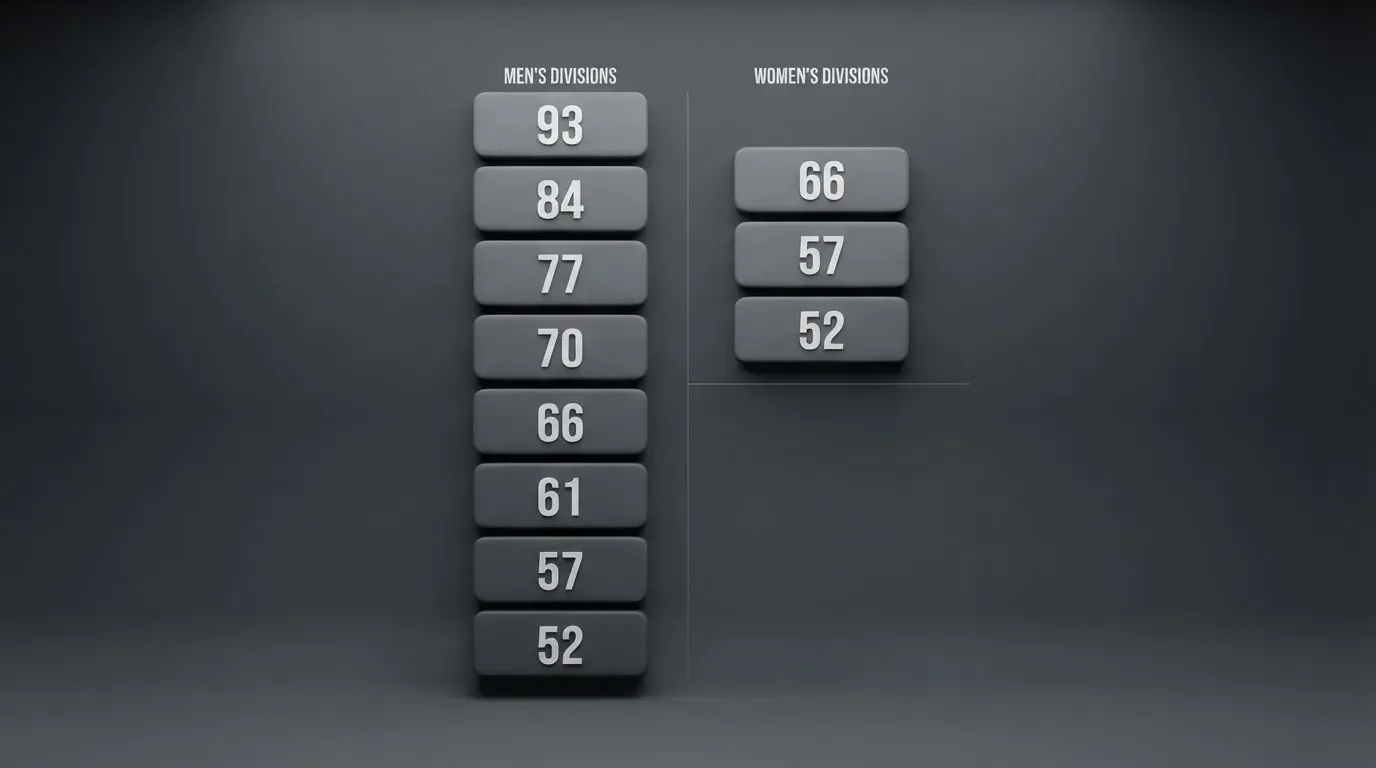
The UFC was founded on 12 November 1993, when UFC 1 was held at McNichols Sports Arena in Denver, Colorado. The promotion has 11 weight divisions, eight men’s and three women’s, and the title fights are typically sanctioned for five rounds while non-title bouts go no more than three rounds under the Unified Rules. Knowing the structure is not the same as knowing the result, and the section closes on what the rule book does to a betting line. A title fight that has the option of going five rounds is a different over/under proposition from a three-round non-title bout, and the bookmaker prices them as different markets with different margins. The same fighters on a five-round title fight versus a three-round non-title fight are different bets, and a punter who reads only the head-to-head price misses the change in the totals market.
Regional promotions — Bellator, ONE Championship, PFL, the regional circuits in Brazil and Asia — each have their own sanctioning structure and their own weight classes, and the bookmaker prices depend on which promotion is on the card. A punter who keeps an eye on the structure rather than the names catches the differences before they show up in the market.
Responsible gambling and where the help lines are
TAB NZ provides safer gambling tools in its app, namely deposit limits, time-outs and self-exclusion, and lists the free New Zealand Gambling Helpline 0800 654 655 and the text line 8006. A self-exclusion on TAB NZ applies across both TAB and Betcha, since they are one operator group running two apps. There is no national online-betting exclusion register; the register the casino law will require is for online casinos only. The Problem Gambling Levy TAB NZ pays is 0.74% in force from 1 July 2025 to 30 June 2028.
A punter outside the licensed brands has none of these tools. The offshore brands the comparison lists do not run under the New Zealand harm-minimisation framework, do not connect to the Gambling Helpline, and do not enforce self-exclusion across the New Zealand-facing account network. The sober framing is that help exists for every punter — the Gambling Helpline is free, the text line is 8006, Safer Gambling Aotearoa is the national body — but it is on the licensed brands that the tools are wired into the betting app itself. A punter who has crossed over and wants the tools back has to come back across.
Strategy and what the page will not promise
A punter looking for “MMA predictions” or “MMA tips today” wants to know who will win, and the honest answer is that nobody can know that with certainty. The page does not pick winners and does not name a system for finding them. What it does is name the cost a punter pays — in margin, in turnover terms on bonuses, in the absence of New Zealand consumer safeguards on the offshore side — and the only honest strategy is to keep the cost low. Bankroll management is real; picking winners is a separate question of forecasting that no page can deliver.
What the cost-control kind of strategy looks like is plain. A punter who keeps to head-to-head markets pays less margin than one on round totals or method of victory; a punter who does not pay turnover on a bonus keeps the bonus’s value as a small extra rather than as a treadmill; a punter who checks the implied-probability sum of a market before placing the bet has read the cost in advance. The page does not endorse a system, a tipster or a forecast; it lays out the cost the punter pays through every channel, and the rest is the punter’s own call.
The takeaway for a New Zealand punter
The lawful side of the line is one operator running two brands. The cost through the odds is the same kind of cost the punter may face anywhere — margin in every market, compounded across multi-leg bets, realised in the expected-value loss per dollar staked. The cost of being outside the lawful side is different: no New Zealand consumer safeguards, no complaints route, no harm-minimisation tools, and an offshore brand the New Zealand law targets. The most expensive bet a New Zealand punter can place on MMA is not the one with the worst odds in any market; it is the one placed on the unlawful side of the line at all. TAB and Betcha are the lawful answer; the rest is a name in a comparison table.
Frequently asked questions
How does MMA betting work?
MMA betting lets a punter pick the outcome of a fight — the head-to-head moneyline, which method a fighter wins by, or how many rounds the fight lasts — and stake money against the bookmaker’s odds. The punter who picks the right outcome is paid out at decimal odds times the stake; the bookmaker’s margin sits inside every price, and a market’s implied probabilities always sum to more than 100%. Picking one fighter is the simplest form; the broader MMA catalogue includes method-of-victory markets, over/under rounds, and Same Game Multis that combine outcomes from one fight on one slip.
How do I bet on MMA?
Open an account with TAB NZ — the brand TAB or the brand Betcha, both lawful under section 74AAA of the Racing Industry Act 2020. Verify your New Zealand address and ID, deposit funds, open the MMA/UFC market on the app, and place a bet by selecting the outcome and entering the stake; decimal odds show the return including the stake. Customers must be 18 or over, and the safer-gambling tools — deposit limits, time-outs and self-exclusion — are built into the app.
How do I bet on MMA fights?
The TAB NZ app lists MMA/UFC alongside horse and harness racing, rugby, NRL, NBA, NFL, tennis, cricket, football, motorsports and esports. Open the MMA section, find the fight card, pick a market — head-to-head, method of victory, over/under rounds — and stake on the outcome. Decimal odds are what New Zealand uses; a price of $2.50 means a $10 stake returns $25 if it wins. Same Game Multis let a punter combine outcomes from one fight into one bet slip at a multiplied price.
Which bookmaker may lawfully take sports and racing bets in New Zealand?
TAB New Zealand, trading under two online brands: TAB and Betcha. Section 74AAA of the Racing Industry Act 2020, in force from 28 June 2025, makes TAB NZ the only provider allowed to offer racing betting, sports betting or other racing or sports betting to a person in New Zealand. There is no application route for another bookmaker and no register for betting licences, because the regime provides for one lawful operator run under partnership with Entain.
How is the return on a bet worked out from the stake and the odds?
In decimal odds the return equals the stake multiplied by the odds. A $20 stake at decimal odds of $3.40 returns $68 if the bet wins, of which $48 is net profit and $20 is the stake returned. For a combination bet the odds of each leg multiply into one combined price; a three-leg multi at legs of 2.00, 1.80 and 1.50 carries a combined price of 5.40. The bookmaker’s margin sits inside every leg, so the multi carries the compounded margin of all three legs, not just the headline price.
What is the bookmaker’s margin and how can it be seen in the odds?
The margin is the share of every dollar staked that the bookmaker keeps, on average, across all outcomes of a market. A market with decimal odds 1.90 / 1.90 implies probabilities of 52.6% on each outcome, summing to 105.3%, giving an overround of 5.3% and an implied payout of 95.0% to the punter. A market priced at 1.95 / 1.95 sums to 102.6% (a 2.6% overround), and a market at 1.85 / 1.85 sums to 108.1% (an 8.1% overround). The narrower the overround, the cheaper the market for the punter; the wider the overround, the more the bookmaker takes.
Tennis, golf & more – kiwicricketodds
Content created by the «kiwicricketodds» team
