
Virtual Sports Betting in New Zealand: What the Law Allows and Where to Bet
 Available in US
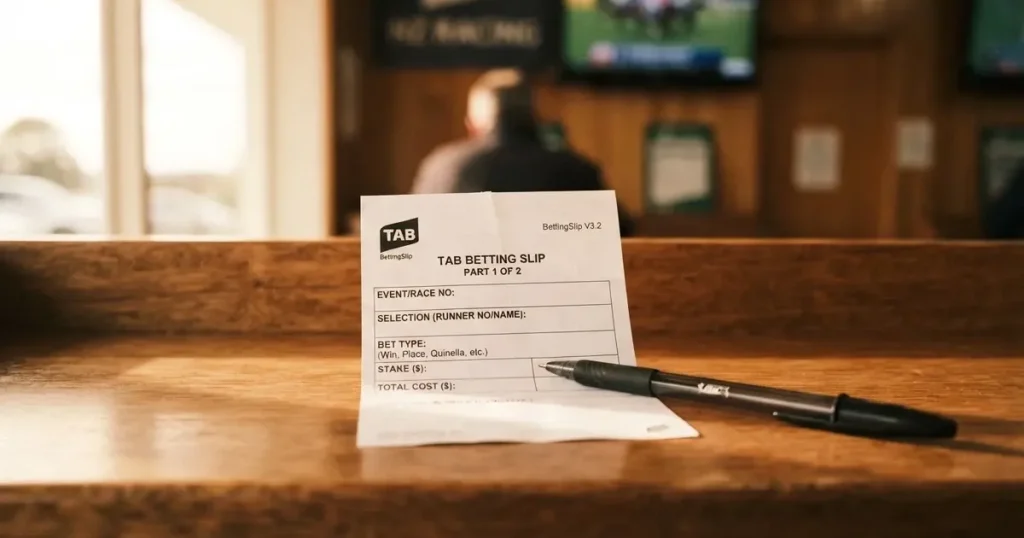
Since the Racing Industry Amendment Act 2025 took effect on 28 June 2025, the only bookmakers that may lawfully take an online sports or racing bet from a person in New Zealand are TAB NZ and its online sister brand Betcha. The Online Casino Gambling Act 2026 then slotted computer-simulated sporting events into the casino regime rather than the sports-betting regime, so the answer to “where do I bet on virtual football in New Zealand” is shaped as much by statute as by what an offshore site happens to advertise. This page walks through the mechanics, the choices, the legal frame and the harm-minimisation tools that apply, then puts the main brands a New Zealand punter meets side by side so the trade-offs are clear at a glance.
Currency as of October 30, 2026 — checked against the Department of Internal Affairs register and the Racing Industry Act 2020 (section 74AAA, in force 28 June 2025).
How to read virtual markets: probability, RNG and what the price actually tells you
Virtual sports look like sport from the outside. A 90-minute football match is compressed into a few minutes, the graphics look broadcast-quality, the league tables update and the next kick-off is a few clicks away. The mechanics underneath have nothing to do with form, fitness or fixtures. Every outcome is generated by a Random Number Generator, the same family of systems that decides the order of cards in a deck of online blackjack or the position a digital roulette ball comes to rest. The animation that follows is a render of what the RNG has already decided. A bet placed at decimal odds 2.00 against a “home win” is paid out at those odds if the simulation says the home team wins; the result is settled the moment the simulation finishes, with no stoppage time, no VAR, no late equaliser to wait for.
That single fact is what changes the way a punter has to think. Real football lets you read a team sheet, weigh injuries, look at head-to-heads and weigh a price against what your own probability says. The virtual version strips all of that out. The odds are set by the operator’s pricing model and the RNG, and the public cannot pull information from anywhere else. A model that tries to find a “system” for virtual football is hunting for a pattern in a system whose entire purpose is to produce no pattern. Several sites publish “free virtual football betting systems” — sequences of stake sizes and selection rules packaged as a money-making method. A system like that is a money-management plan, not a forecasting edge. It can change the shape of a losing run, and it can change nothing about whether the bets win.
The honest framing is closer to a lottery than to a Premier League acca. The house edge is built in by the margin the operator sets in the prices, in the same way a roulette wheel has a built-in edge. The difference is that roulette pays fixed multiples and virtual sports can show any decimal price the operator wants. The price becomes a way of expressing the operator’s confidence in each outcome, and the operator’s overall take is the gap between true probability and the implied probability in the prices — the same gap that exists in any sports market. A punter who understands the gap reads the price; a punter who doesn’t reads the teams.
Two practical things follow. The first is bankroll. Because each fixture is a one-shot outcome decided by a closed RNG, sessions move fast. A punter who places ten bets in a real football hour might place forty in the same wall-clock window on virtual markets, simply because each match takes a couple of minutes. A budget that lasts a Saturday afternoon in the Premier League lasts a fraction of that in a virtual session. The second is settlement. There is no void, no postponement, no referee controversy. Each result lands on a feed and the bet is paid or taken in seconds. From the punter’s side that is convenience; from the operator’s side it is exactly the design that makes a margin work.
That bankroll point is the first decision a virtual-only session forces, and it is the one that decides whether the session is entertainment or harm. The mechanics are clear: a fixed stake, a clear ceiling, a stop-loss and a stop at any session length the punter has decided in advance. A punter who plans the bankroll before the first bet is the punter who decides what virtual sports cost them.
What a virtual bet actually pays: stake, odds and the return on a win
The arithmetic of a virtual bet is the same arithmetic as a real-sport bet. The stake is multiplied by the decimal odds to give the return when the bet wins; the profit is the return minus the stake. A $10 bet at $1.90 returns $19, for a profit of $9. A $10 bet at $3.50 returns $35, for a profit of $25. A multi — two or more selections, each with their own odds — multiplies the legs into one price, so a multi of two $1.90 legs is priced at $1.90 × $1.90 = $3.61. Stake times that price is the return on a win.
A couple of distinctions matter before a punter reads any number. The first is the return versus the payout. On a winning bet the bookmaker returns the stake plus the profit; the total that lands back in the account is the stake multiplied by the odds. A punter who describes the “payout” as just the profit is describing a half-truth, and the distinction matters when the bet loses — there is no payout then at all, just the stake returned to zero. The second distinction is stake-not-returned for a free bet. Where the offer is a free bet, the stake is not paid back on a win. A $10 free bet at $3.00 returns $20 in profit, not $30. A punter who reads “win $30” on a free bet has read the marketing, not the math.
The third distinction is the one most punters never see named: the bookmaker’s margin. Decimal odds of $1.90 / $1.90 on a two-way market look like an even match, but they aren’t. Each side’s implied probability is 1 ÷ 1.90 = 0.5263, or 52.63%. Two sides at 52.63% add to 105.26%. The extra 5.26% over 100% is the bookmaker’s margin — the share of every dollar bet that the bookmaker keeps on average. Take the reciprocal of the sum of the implied probabilities and you get the payout share, which is 1 ÷ 1.0526 = 0.9500, or 95.00%. The two views are the same market seen from two sides: 95% goes back to punters, 5% stays with the bookmaker. That is the price a punter pays for the convenience of a virtual fixture being available every couple of minutes.
The illustrative numbers above are exactly that — illustrative. They show how the math reads in the article, not a price TAB NZ or any other operator is quoting. Real prices vary by event, by market and by the time of day, and the snapshot research carries does not name specific prices. The shape is what carries: any time the implied probabilities on a market add up to more than 100%, the difference is the margin the bookmaker is keeping.
The choice in New Zealand: TAB NZ, Betcha and the offshore brands Kiwi punters actually meet
New Zealand’s betting market in 2026 is narrower than it looks and wider than the statute suggests. The narrow part is the law: section 74AAA of the Racing Industry Act 2020, inserted by the Racing Industry Amendment Act 2025 and in force from 28 June 2025, says that no person other than TAB NZ may offer racing or sports betting to a person in New Zealand, regardless of where that person is resident or incorporated. The Department of Internal Affairs told unlicensed providers serving New Zealand to withdraw with immediate effect. TAB NZ is a single operator group with two online brands, TAB and Betcha, both run by Entain under a 25-year partnership signed in 2023. Entain takes a 50/50 share of gross profits, with at least $150 million a year flowing to TAB NZ for the first five years and a one-off $100 million payment pledged to the racing sector. Betcha is not a rival bookmaker to TAB. They are the same operator on two digital shopfronts.
The market for virtual betting in New Zealand is shaped by the legal framework and the choices each operator offers. A New Zealand punter who explores the virtual landscape finds offshore brands, most of them running on a Curaçao or Tobique Gaming Commission licence, advertising odds on virtual football, virtual horse racing, virtual basketball and the rest. Some of those brands run an English – NZ version of their site, with NZD pricing and a few payment methods popular in New Zealand. None of them hold a New Zealand betting licence, because no such licence exists for a second operator. Some of them list a virtual sports product; for the rest, the virtual category is not a primary focus and they are not a direct match for the product.
The trade-off the punter is making is the trade-off the rest of this section is built around. On one side: TAB NZ and Betcha, with New Zealand harm-minimisation tools, a New Zealand complaints framework, the Problem Gambling Levy underwriting the Gambling Helpline, and a published set of betting rules. On the other: offshore brands with broader virtual menus, different bonus structures and a different regulatory cover. The right answer depends on what the punter actually wants from a virtual session and on what they are prepared to give up.
| Operator | Brand status in New Zealand | Virtual sports product on the operator’s own terms |
|---|---|---|
| TAB | TAB NZ brand (lawful under section 74AAA) | Virtual product details not established in the available material |
| Betcha | TAB NZ brand (lawful under section 74AAA) | Virtual product details not established in the available material |
| Spinbara | Not licensed in New Zealand | First-deposit bonus and crypto welcome bonus advertised; virtual offering not specified |
| FunBet | Not licensed in New Zealand | Sportsbook covers football, ice hockey, American football, basketball, volleyball, tennis, rugby, baseball; live betting available 24/7; virtual coverage not specified |
| Alawin | Not licensed in New Zealand | Cash out with partial cash out available; not on free bets or risk-free bets; virtual coverage not specified |
| Rooster.bet | Not licensed in New Zealand | Tobique e-gaming licence (No. 0000002) via Novatrix SRL in Costa Rica; virtual coverage not specified |
| RoyalistPlay | Not licensed in New Zealand | Tobique e-gaming licence (No. 0000002) via Novatrix SRL in Costa Rica; English – NZ site version available; virtual coverage not specified |
| Glorion | Not licensed in New Zealand | Support by live chat and email, 18+ only; virtual coverage not specified |
| RTbet | Not licensed in New Zealand | Curaçao licence; cash out locks the amount at acceptance, not always available; virtual coverage not specified |
| BillyBets | Not licensed in New Zealand | Three odds formats (Decimal, American, Fractional), coin-shop loyalty, five-level VIP; virtual coverage not specified |
The third column shows what the operator’s own terms say about its product. Most of the offshore brands do not publish a virtual sports schedule. That doesn’t mean they don’t run virtuals; it means the verification isn’t there. A punter who wants to know which virtual leagues a brand covers has to check that brand’s own virtual lobby before depositing. The first column makes the legal position clear: TAB and Betcha are the only brands that may lawfully take a sports or racing bet from a person in New Zealand. Every other brand on the list is operating outside the New Zealand regime. None of them are presented here as safe, legal or recommended in New Zealand.
What “not licensed in New Zealand” actually changes
The label means three things the punter can act on. First, the New Zealand regulator does not have a handle on the brand. There is no licence register to check, no New Zealand harm-minimisation framework that applies and no New Zealand complaints route that reaches the operator. The Department of Internal Affairs has warned that overseas operators may be in jurisdictions with minimal consumer safeguards, may not return unspent credits and may not pay out large wins. The brand’s own regulator — Tobique, Curaçao, Kahnawake, the Malta Gaming Authority — is the only one with jurisdiction, and the practical chance of a New Zealand punter escalating a complaint to any of those is low.
Second, the law targets the operator, not the player. Section 19(4) of the Gambling Act 2003, inserted in 2025, says an individual may not be convicted for placing a bet with an offshore betting operator in breach of section 74AAA. No published penalty for a player was found. New Zealand does not block bookmaker sites at the network level. The bookmaker’s site loads; the bookmaker’s marketing reaches the punter; the bet is technically possible. Whether the bet is a sensible thing to do is the punter’s own call to make.
Third, the bets the punter places with an offshore brand are not protected by the New Zealand framework. If a credit sits in an offshore account, New Zealand’s harm-minimisation tools — the deposit limits, the time-outs, the self-exclusion — do not reach that account. Self-exclusion at TAB NZ covers TAB and Betcha; it does not cover a Curaçao-licensed brand, and a punter who has self-excluded locally to control their betting has to enforce the same boundary on every offshore account they hold. The offshore brand may have its own tools, and several of the brands in the table list them. The punter has to read those terms and apply them, because New Zealand’s oversight does not.
Choosing between betting paths: what a New Zealand punter faces
The honest answer depends on what a player is looking for. A punter prioritising New Zealand regulation with its harm-minimisation tools, local complaints route, NZD banking, and published betting rules chooses TAB or Betcha. A punter interested in a broader virtual menu, different odds, a unique bonus structure, or features TAB NZ does not provide is choosing between an offshore brand’s terms and the absence of local protection. Neither path is the “safe choice” for everyone. The user’s job is to read the offshore brand’s terms before depositing, understand the regulator involved, and apply the same bankroll discipline they use with TAB NZ.
The angle this page takes is choice: which paths exist, who each one suits, and what each one costs. The cost on the TAB NZ side is a smaller virtual menu and a single operator group; the cost on the offshore side is the loss of New Zealand protection. A punter who has weighed the two and decided the offshore menu is worth the loss has made an adult decision. A punter who has weighed the two and decided the protection is worth the smaller menu has made a different one. Either way, the choice is theirs.
The fundamentals of the New Zealand market: TAB NZ, Entain and the structure underneath the brands
The structure of New Zealand’s betting market in 2026 rests on a single legal change and a long commercial contract. The legal change is the Racing Industry Amendment Act 2025, which inserted section 74AAA into the Racing Industry Act 2020. From 28 June 2025, only TAB NZ may offer racing or sports betting to a person in New Zealand. There is no licence to apply for and no register of licensed bookmakers, because there is only one lawful operator. The Department of Internal Affairs is the regulator, monitoring compliance under section 92A. The Department told unlicensed providers serving New Zealand to withdraw with immediate effect. The change is not a tightening of an existing regime; it is the consolidation of an existing position into a statutory monopoly.

The commercial contract is the 25-year partnership between TAB NZ and Entain, signed in 2023. Entain runs the TAB business in New Zealand and the betting platform underneath both brands. The headline economics are a 50/50 share of gross profits, with TAB NZ guaranteed at least $150 million a year for the first five years of the deal, and a one-off $100 million payment Entain pledged to the racing sector. Entain’s pitch to the racing codes is that a global operator with the technology stack and the marketing reach can grow the total pool of betting turnover in New Zealand, with the racing codes taking a slice of a larger pie rather than a larger slice of a flat one. The first five years of the deal are the period in which that promise is tested, because the $150 million floor means TAB NZ is paid whether or not turnover grows. After that, the share of gross profits takes over and the equation changes.
TAB NZ and Betcha are the two online brands of the same operator group. They share the same back-end, the same harm-minimisation tools, the same customer account framework and the same self-exclusion. They are differentiated on the front end. TAB is the longer-established brand, sitting on the same digital shopfront the retail TAB outlets have always pointed at. Betcha is the newer, social-first product, with a daily Toolbox of odds boosts and insurance tools, a Bet Social section where punters chat, follow tipsters and share bets or pools, and a Playbook with tips and match analysis. The point of having two brands is not to give New Zealanders two bookmakers to choose from; it is to give two different audiences a different shape of the same product, and the marketing split is between the traditional racing-and-sports punter and the younger, social-first bettor who has grown up with a phone in their hand.
The greyhound code is the open question in the structure. From 1 August 2026 greyhound racing is closing in stages, and from that date offshore operators may not take bets on greyhound races either. TAB NZ will continue to take bets on greyhound races until the code is wound down, after which the relevant lines in the betting program are removed. The code has been a small but visible part of the New Zealand tote for decades, and its closure removes one of the products the law has historically protected. For a punter who follows the dogs, the relevant horizon is the wind-down schedule; for a punter who doesn’t, the change is a footnote in the program.
The third leg of the structure is the casino regime under the Online Casino Gambling Act 2026. The Act licenses online casino gambling and counts betting on a computer-simulated sporting event as online casino gambling, so a virtual-sports product belongs to the casino regime rather than to TAB NZ’s sports regime. Whether TAB NZ’s own virtual products are treated differently is not established. A punter who wants clarity on what the operator’s own terms say about virtual sports coverage has to read those terms directly, because the legal frame for virtual sports is not the same as the legal frame for sports betting on a real event. The casino regime has its own regulator, its own licence register and its own harm-minimisation framework, and the boundary between the two regimes is the boundary between TAB NZ’s sports-betting product and a casino-style virtual sports product.
What the statute actually says: section 74AAA, the regulator and the limits of the law
The Racing Industry Amendment Act 2025 inserted section 74AAA into the Racing Industry Act 2020. The section is short. It says no person other than TAB NZ may offer racing or sports betting services to anyone residing or present in New Zealand, regardless of where that person is resident or incorporated. The change took effect on 28 June 2025. The Department of Internal Affairs, the gambling regulator under the Gambling Act 2003, is responsible for monitoring compliance with the betting prohibition under section 92A of the Racing Industry Act 2020. The Department told unlicensed providers serving New Zealand to withdraw with immediate effect.

The statute is not the only relevant law. The Gambling Act 2003 sets the broader framework: it defines what gambling is, who may provide it and what regulator oversight looks like. Section 19(4), inserted in 2025, says an individual may not be convicted for placing a bet with an offshore betting operator in breach of section 74AAA; that clause is the legal basis for the framing that the law targets the operator, not the player. No published penalty for a player was found. The penalty for an offshore operator that breaches section 74AAA is not stated in the section itself, and no prosecution of an offshore bookmaker was found. The Department of Internal Affairs’ public position is that it warns offshore providers serving New Zealand to withdraw, and the New Zealand framework is built around the operator side of the bet.
The Online Casino Gambling Act 2026 sits alongside the Racing Industry Act 2020 rather than replacing it. The 2026 Act licenses online casino gambling, not sports betting. The two regimes are separate. A bookmaker that holds a Curaçao or Tobique licence and serves New Zealand residents is not made legal by holding that licence; the offshore licence is a foreign regulator’s permission, and the New Zealand law applies regardless of where the operator is incorporated. The Department of Internal Affairs has been explicit about that distinction in its communications to unlicensed providers.
What may be bet on is also statute-bounded. The Racing Industry Act 2020 covers racing and sports. TAB NZ takes fixed-odds and tote (pool) bets; its published betting rules define Win, Place, Each Way, Quinella, Exacta, Trifecta, First Four, Double, Treble, Daily Double, Running Double, Quaddie, Big6, and Multis and Same Game Multis. Live betting is listed in the TAB NZ apps. Whether a particular in-play market is restricted is not established, and the page does not generalise. There is no lawful New Zealand betting exchange, and spread betting is outside TAB NZ’s sports-betting definition. Bets on politics and novelty markets are not established. There is no statutory per-bet cap; limits are TAB NZ’s own terms.
What may not be bet on, in the broader regulatory sense, is the offshore product. The page does not invite a reader to sign up with an offshore brand, and it does not describe offshore betting as either legal or illegal for the player. TAB NZ and Betcha are the only lawful option, with New Zealand harm-minimisation tools, regulator oversight and a complaints framework; offshore brands operate outside that framework, with the Department of Internal Affairs’ stated risks and no New Zealand complaints route. The punter’s own call is where the page leaves the legal frame.
The advertising frame adds a second layer. The Advertising Standards Authority’s Gambling Advertising Code applies to betting advertisements. Ads must not target children (under 14) or young people (14 to under 18), judged by context, appeal and expected audience — 25% or more of the audience counts as significant where accurate data exists. Ads must not encourage harm and must be truthful with terms available. There is no New Zealand equivalent of a “whistle-to-whistle” ban for betting. TAB NZ runs “bonus bets” promotions; no New Zealand rule on bet-bonus size or wagering terms was found, so the only applicable terms are TAB NZ’s own.
The tax frame is the third layer. For the player, Inland Revenue guidance says recreational gambling winnings are generally not taxable, and prize money from TAB horse, dog and trotting races is not taxable. A person who bets as a business is a different case — the page notes Inland Revenue’s general position but is not tax advice and the punter is pointed to Inland Revenue or an accountant. On the operator side, TAB NZ pays the Problem Gambling Levy (0.74%, in force from 1 July 2025 to 30 June 2028). Overseas operators supplying New Zealand residents pay online gambling duty (12% of profits since 1 July 2024, 16% from 1 January 2027), but a duty being payable does not make an offer lawful. The point-of-consumption charge on offshore racing and sports bets ceased on 30 June 2026. The cessation is a tax change, not a legalisation; an offshore brand that no longer pays the point-of-consumption charge is still breaching section 74AAA if it takes a New Zealand bet.
Player protection: age, identity, tools and the harm-minimisation framework
The age for TAB NZ betting is 18, set by section 89 of the Racing Industry Act 2020. Betting under 18 is an offence under that section. The age for land-based casinos is 20, set by the Gambling Act 2003; the two ages are not the same and the page does not merge them. A punter under 18 cannot open a TAB NZ or Betcha account, and a punter under 20 cannot enter a land-based casino in New Zealand. The two regimes are independent.
Account opening at TAB NZ requires a verified New Zealand address and ID. The verification is a regulatory requirement, not a marketing one. The punter has to provide documentation that confirms they are who they say they are and that they live in New Zealand; the account is then tied to that identity and that location. An offshore brand that does not run the same verification is running on its own standards, and the punter has to read those standards to know what the brand actually checks. The page does not generalise on what offshore brands verify; the punter reads the brand’s own account-opening terms.
TAB NZ publishes its harm-minimisation tools in its app. The three named tools are deposit limits, time-outs and self-exclusion. A deposit limit caps the amount a punter can deposit over a chosen period; a time-out is a short break the punter sets themselves; a self-exclusion is a longer block. The exclusion applies across TAB NZ’s brands, so a self-exclusion on TAB carries over to Betcha and vice versa. The punter who wants to set a limit can do so in the app; the punter who wants to lift a limit has to go through the cooling-off period the operator’s own terms describe. A punter who is not on TAB NZ and wants the same set of tools has to check the offshore brand’s own responsible-gambling page; several of the brands in the operator table list their own tools, and the punter’s job is to read them.
The Problem Gambling Levy is the funding mechanism underneath the help services. TAB NZ pays 0.74% of its gross profits into the levy, in force from 1 July 2025 to 30 June 2028. The levy underwrites prevention, treatment and the public helpline. Offshore operators supplying New Zealand residents pay online gambling duty at 12% of profits since 1 July 2024, rising to 16% from 1 January 2027. The tax revenue funds the same harm-minimisation framework the levy does, so a dollar of duty from an offshore brand contributes to the public health response to gambling harm in New Zealand. The contribution is a tax fact; it is not a legal fact. The offshore brand is still breaching section 74AAA if it takes a New Zealand bet, regardless of how much duty it pays.
The help services themselves are the safety net a punter who has hit a wall can reach. The free Gambling Helpline is 0800 654 655, with a text line at 8006. Safer Gambling Aotearoa is the public-facing education and prevention programme. The punter who finds themselves betting more than they planned, chasing losses, or hiding their betting from the people around them is the punter for whom the helpline exists. The service is free, confidential and available to family as well as to the person betting. The punter who wants help before they need it can read the responsible-gambling page on TAB NZ or on the offshore brand they use, set a deposit limit, and commit to a session length before the first bet. The page describes the tools because they exist, and because a punter who knows the tools is a punter who can use them.
The Top 10 brands a New Zealand punter actually meets
This section walks through the ten brands in the table one at a time. TAB and Betcha come first, then the offshore brands. The first two are lawful in New Zealand; the rest are not. The pattern below is the same: a paragraph on what the brand is, a paragraph on what its own terms say, and a closing judgement that names what the brand is actually for. The closing lines are deliberately varied — they answer different questions.
TAB — the lawful default for racing and sports
TAB is the older of the two TAB NZ online brands and the shopfront the retail outlets have always pointed at. The platform runs on Entain’s technology stack under the 25-year partnership. The app, published on the New Zealand App Store under the seller name New Zealand Racing Board and first released on 8 September 2014, is the digital companion to the retail counter, and the betting rules it carries are the same rules the counter has always used: fixed-odds, tote, Win, Place, Each Way, Quinella, Exacta, Trifecta, First Four, Double, Treble, Daily Double, Running Double, Quaddie and Big6, with Multis and Same Game Multis for sports. Live betting is listed in the apps. Deposit limits, time-outs and self-exclusion are the harm-minimisation tools, and an exclusion covers both TAB and Betcha. The Gambling Helpline (0800 654 655) and the text line (8006) are listed in the app.
The product the punter sees is shaped by Entain’s technology. The interface is the standard mobile-first racing-and-sports flow, with the bet slip front and centre, the next-to-go races pinned to the top, and a multi-builder that lets the punter combine legs from one event (Same Game Multi) or across events. The published betting rules are the same set of rules that has applied to TAB betting for decades, with a few additions for the digital channels. There is no published virtual sports schedule, and the legal frame for virtual sports sits under the Online Casino Gambling Act 2026 rather than the Racing Industry Act 2020. A punter who wants to know whether TAB NZ carries a virtual product has to read the current TAB app directly.
The verdict on TAB reflects the regulated default. A punter valuing New Zealand oversight, local complaints processes, harm-minimisation tools and a consistent set of betting rules, who is content with the local offering, finds TAB the natural choice. The tradeoff is a smaller menu compared to offshore sites, and the operator’s pricing is the sole quote available.
Betcha — the social-first shopfront of the same operator
Betcha is the newer TAB NZ brand, and the framing is social-first rather than counter-first. The product shape is the giveaway: a daily Toolbox with odds boosts and insurance tools, a Bet Social section where punters chat, follow tipsters and share bets or pools, and a Playbook with tips and match analysis. The three features describe a product that is built around what a younger, mobile-first punter does with their phone — open the app, see what their network is betting, follow a tipster whose record they like, and add a boosted leg to a multi. The underlying bookmaker is TAB NZ. The platform is the same. The bet settlement and the betting rules are the same. The only difference is the front end and the audience it speaks to.
The features that matter to the punter are the features that matter on TAB, plus the social layer. The Toolbox is a daily refresh of odds boosts and insurance tools for bets that do not land; the insurance is operator-funded, the odds boosts are operator-set, and the punter’s job is to read the terms on each tool. The Bet Social section is the social product — a chat and follow feed. The Playbook is a tips and analysis section. None of the three features changes the underlying economics of the bet. A boosted odds leg pays the boosted price if it wins, the same way an un-boosted leg pays the un-boosted price. An insurance tool pays out under a defined condition, the same way a free bet pays out under its own. The punter reads the tool’s terms the way they use other tools.
The verdict on Betcha is that it is the TAB NZ product for the punter who wants a social product on top of a New Zealand-regulated bookmaker. The same harm-minimisation tools apply, the same self-exclusion covers both brands, and the same regulator oversight is in place. A punter who finds the social layer useful and likes the daily Toolbox of boosts and insurance picks Betcha over TAB; a punter who doesn’t find the social layer useful sticks with TAB. They are not rivals; they are two shopfronts of the same operator group, and the choice is a product-shape choice rather than a price choice.
Spinbara — first-deposit bonus and crypto welcome bonus, no New Zealand licence
Spinbara is an offshore brand advertising a first-deposit bonus of 100% up to EUR 100 and a sport crypto welcome bonus of 100% up to 200 USDT, alongside a casino welcome bonus of 100% up to EUR 500 plus 200 free spins. The bonuses are the brand’s main marketing point. The brand names no licence that applies in New Zealand; the New Zealand regime does not reach it; and the New Zealand complaints framework does not cover it. The Department of Internal Affairs’ warning about overseas operators — minimal consumer safeguards, possible non-return of unspent credits, possible non-payout of large wins — applies in full.
The product the punter sees is shaped by the bonus structure. A first-deposit bonus of 100% up to EUR 100 means the operator matches the first deposit dollar-for-dollar up to the cap; a 100 USDT crypto welcome bonus does the same in USDT. A free-spin bundle on a casino welcome bonus is a casino product, not a sports product. The wagering terms on each bonus are the operator’s own terms; the punter has to read them, because the brand’s regulator — whichever one that is — does not enforce the New Zealand framework.
The verdict on Spinbara is that bonuses drive interest while the regulatory gap remains a factor. A punter attracted to the bonus structure and comfortable with offshore terms can review the rules and decide; a player who prioritises local regulatory cover and harm-minimisation tools might look elsewhere. The page details the brand so the player understands the decision, and the lack of a local licence is a key consideration.
FunBet — broad sportsbook with 24/7 live betting
FunBet’s sportsbook offers odds on football, ice hockey, American football, basketball, volleyball, tennis, rugby and baseball, with live betting available 24/7. The breadth of the sports menu is the brand’s pitch. The brand names no licence that applies in New Zealand, and the New Zealand regulatory cover does not extend to it. The live-betting 24/7 framing is the practical edge over brands with narrower windows, and the punter who wants a long session on a Tuesday afternoon finds a market open.
The product is a mainstream offshore sportsbook: pre-match markets, live markets, and the common market types. The sports menu covers most of the codes a New Zealand punter follows — rugby, football, tennis, basketball, baseball — and the live-betting schedule is the through-the-night schedule a 24/7 bookmaker runs. The published terms and the operator’s own responsible-gambling page are the punter’s reference points; the brand’s regulator — whichever that is — is the only one with jurisdiction over a complaint.
The verdict on FunBet is that the extensive sports menu and the continuous live-betting schedule are the main drawcards for a player seeking a long session, while the absence of a New Zealand licence is the trade-off. Someone wanting a locally regulated product skips FunBet; someone prioritising the sports variety and live-betting window, and comfortable with the offshore terms, might choose it. The player reads the terms before depositing.
Alawin — cash out with partial cash out, with the usual disclaimers
Alawin’s product shape is set by the cash-out feature. The brand offers cash out before an event or market is finalised, with partial cash out available, and the cash-out amount is fixed at the moment the punter accepts. The feature is not guaranteed to be available on every market or at every moment, and cash out is not available on free bets or risk-free bets. The last two clauses are the marketing’s correction: the punter who thinks cash out is a universal feature has not read the disclaimers.
The sportsbook is a standard offshore offering, with the usual market types and a multi-builder. The brand names no licence that applies in New Zealand. The New Zealand regulatory cover does not extend to it. The cash-out feature is the brand’s drawcard; the offshore terms are the brand’s cost; and the punter’s job is to read both before placing a bet.
The verdict on Alawin focuses on the partial cash-out feature as a practical tool, provided the player understands the disclaimers, while the lack of a local licence is a defining characteristic. A punter seeking this cash-out flexibility and comfortable with the offshore terms chooses Alawin; someone requiring New Zealand regulatory cover typically does not.
Rooster.bet — Tobique-licensed, New Zealand not covered
Rooster.bet is operated by Novatrix SRL, a company incorporated in Costa Rica with registration number 3-102-893958, under e-gaming licence No. 0000002 issued by the Tobique Gaming Commission. The Tobique licence is a foreign regulator’s permission and gives no right to take bets from people in New Zealand. The New Zealand regime does not reach the brand. The Department of Internal Affairs’ warning applies in full.
The brand’s sportsbook has Live, Sports Promotions, Results, Schedule, E-sports and Predictions sections, and shows odds in six formats. The menu is a mainstream offshore sportsbook, with common markets. The published terms and the operator’s own responsible-gambling page are the punter’s reference points.
The verdict on Rooster.bet recognises the Tobique licence as a jurisdiction not associated with New Zealand. A player seeking a locally regulated experience does not select this brand; someone comfortable with the Tobique regulator and the operator’s terms may find it suitable. The punter reviews the brand’s own terms, and the licensing situation is a primary fact.
RoyalistPlay — same operator, NZ site version available
RoyalistPlay is owned and operated by Novatrix SRL, the same Costa Rica company as Rooster.bet, under the same Tobique e-gaming licence (No. 0000002). The brand offers an English – NZ version of the site, with odds shown in European, British, Hong Kong, American, Indonesian and Malaysian formats. The NZ site version is a localisation rather than a New Zealand licence; the New Zealand regulatory cover does not extend to it.
The product the punter sees is the standard offshore sportsbook, with common markets. The six odds formats are a feature for a punter who prefers a format other than decimal; a punter who bets in decimal sticks to decimal. The punter’s reference points are the brand’s own terms and the brand’s own responsible-gambling page.
The verdict on RoyalistPlay is that the NZ site version is a convenience for a New Zealand punter and a Tobique licence is a Tobique licence, not a New Zealand one. A punter who values the localisation picks RoyalistPlay over a brand that does not run an NZ site version; a punter who values the New Zealand regulatory cover does not pick the brand at all. The punter reads the terms before depositing.
Glorion — 18+ only, support by live chat and email
Glorion is an offshore brand that accepts customers over 18 years of age only and runs support by live chat and email. The 18+ age rule matches the New Zealand betting age, and the punter who is over 18 on TAB NZ is over 18 on Glorion.
The product is a standard offshore sportsbook with common markets. The 18+ rule and the live chat support are the brand’s stated operational details. The punter’s reference points are the brand’s own terms and the brand’s own responsible-gambling page.
The verdict on Glorion is that the brand is an offshore sportsbook with a stated age rule and stated support channels, and the absence of a New Zealand licence is the central fact. A punter who is comfortable with the offshore terms and the offshore regulator can read the brand’s own page and decide; a punter who wants the New Zealand regulatory cover does not.
RTbet — Curaçao-licensed, cash out with the standard disclaimer
RTbet offers cash out before an event or market is finalised, fixes the cash-out amount at the moment it is accepted, and does not guarantee that the feature is always available. The Curaçao licence is a foreign regulator’s permission and gives no right to take bets from people in New Zealand. The New Zealand regime does not reach the brand. The Department of Internal Affairs’ warning applies in full.
The product is a standard offshore sportsbook with common markets. The cash-out feature is the brand’s drawcard; the offshore terms are the brand’s cost. The punter’s reference points are the brand’s own terms and the brand’s own responsible-gambling page.
The verdict on RTbet is that the Curaçao licence is a real licence in a real jurisdiction, and a real jurisdiction that is not New Zealand. A punter who wants a New Zealand-regulated product does not pick the brand; a punter who is comfortable with the Curaçao regulator and the operator’s own terms does. The cash-out disclaimer is the boundary of the feature, and the punter reads it before using it.
BillyBets — three odds formats, coin-shop loyalty, five-level VIP
BillyBets offers bettors three odds formats — Decimal (2.00), American (+100) and Fractional (1/1) — and a coin-shop loyalty product where coins collected by depositing, betting, tournaments and challenges can be exchanged for free bets and free spins, alongside a five-level VIP programme. The brand also lists cashback and reload bonuses on sports.
The product the punter sees is a standard offshore sportsbook with a loyalty layer on top. The three odds formats are a feature for a punter who prefers American or fractional; a punter who bets in decimal sticks to decimal. The coin shop is a loyalty mechanic: deposit, bet, enter tournaments and challenges, collect coins, exchange for free bets and free spins. The five VIP levels are a tiered loyalty programme with a higher-tier benefit at each step.
The verdict on BillyBets highlights the loyalty scheme as the main feature for someone who enjoys structured rewards, and the three odds formats provide flexibility, though the lack of local licensing remains a key fact. A player seeking a New Zealand-regulated experience typically looks elsewhere, while someone who values the loyalty product and the odds options, and is comfortable with offshore terms, may find it fits their needs.
The bookmaker’s margin and the punter’s edge: a worked example
The margin is the part of the market the punter is always paying, on every bet, on every market, on every brand. It is the gap between true probability and the implied probability in the prices, and the gap is the bookmaker’s take. The arithmetic is the same for any two-way market on any bookmaker, and the example below shows how the numbers read in the article rather than naming a real price.
Take a two-way market priced at decimal odds 1.90 on each side. The implied probability of each side is 1 ÷ 1.90 = 0.5263, or 52.63%. The two implied probabilities add to 105.26%. The extra 5.26% over 100% is the bookmaker’s margin. The reciprocal of the sum of the implied probabilities is 1 ÷ 1.0526 = 0.9500, or 95.00%, and that is the payout share — the share of every dollar bet that the bookmaker pays back to punters on average across all outcomes. The same market seen from two sides gives the same answer: 95% goes back, 5% stays. The punter pays the 5% on every dollar bet, and the bookmaker keeps the 5% on every dollar bet, regardless of who wins.
The shape of the margin is what a punter acts on. A bookmaker with a 3% margin is cheaper to bet with than a bookmaker with a 7% margin, on the same market, on the same event, at the same snapshot date. A market with a tighter margin — match result on a high-profile football match — is cheaper to bet on than a market with a wider margin — a same-game multi leg or an in-play exotic. The price the punter sees is the price after the margin is loaded, and the price the punter needs to beat the margin is the price the bookmaker’s own model says is fair plus the margin. A punter who cannot beat the margin over a session pays the margin. A punter who can — by finding prices that are mispriced relative to the true probability, or by reading a market the bookmaker has priced loosely — covers the margin and keeps the rest.
The realistic reading for a virtual market is that the margin is the price a punter pays for the convenience of a fixture every couple of minutes. The bookmaker’s pricing model is the only model the punter can read, and the margin is built into every price on every fixture. A punter who treats virtual sports as a session of entertainment with a known cost per dollar bet has the right frame; a punter who treats virtual sports as a forecasting challenge has the wrong frame. The arithmetic of the margin is the same arithmetic in both cases. The difference is what the punter expects the arithmetic to do for them.
What an offshore brand’s terms do and don’t give a New Zealand punter
An offshore brand’s terms are the contract the punter agrees to when opening an account. The terms cover the markets offered, the bet types, the maximum stake, the maximum payout, the bonus conditions, the withdrawal rules and the responsible-gambling tools. The terms are enforced by the offshore brand’s regulator, not by the Department of Internal Affairs. A punter who has a dispute with an offshore brand has to take the dispute to the offshore regulator, and the practical chance of a New Zealand punter escalating a complaint to a Tobique, Curaçao or other offshore regulator is low. The Department of Internal Affairs’ warning is the public statement of the position.
The terms the punter reads are the same terms the punter uses. A cash-out feature that is “not guaranteed to be available” means exactly that: the punter cannot expect the feature to be there when the punter chooses to use it. A free bet whose stake is not returned on a win means exactly that: the punter receives the profit, not the profit plus the stake. A bonus whose wagering terms require a 5x turnover of the bonus plus deposit at minimum odds 1.50 means exactly that: the punter has to bet the bonus plus deposit five times over at odds of 1.50 or higher before withdrawing. A responsible-gambling tool whose limit applies to deposits, not to losses, means exactly that: a punter can set a deposit ceiling and still lose more than the ceiling through accumulated bets. The terms are the contract. The punter reads them.
The New Zealand framework does not enforce those terms. The Department of Internal Affairs has no jurisdiction over an offshore brand. The New Zealand courts have no jurisdiction over an offshore brand incorporated elsewhere, except through whatever contractual choice-of-law clause the punter agreed to. The punter who signs up with an offshore brand is signing up to that brand’s terms, enforced by that brand’s regulator, with no New Zealand backstop. A punter who values the New Zealand backstop picks TAB or Betcha. A punter who values the offshore menu, the offshore bonus structure or the offshore odds and is comfortable with the offshore terms picks the offshore brand and reads those terms.
Where the legal frame actually bites: the operator side and the player side
The legal frame for New Zealand betting in 2026 has two sides, and they behave differently. The operator side is the side the law targets. Section 74AAA says no person other than TAB NZ may offer racing betting, sports betting or other racing or sports betting to a person in New Zealand. The penalty for breaching section 74AAA is not stated in the section itself, and no prosecution of an offshore bookmaker was found. The Department’s public position is that the offshore operator is the side the law is enforced against.
The player side is the side the law does not target. Section 19(4) of the Gambling Act 2003, inserted in 2025, says an individual may not be convicted for placing a bet with an offshore betting operator in breach of section 74AAA. No published penalty for a player was found. New Zealand does not block bookmaker sites at the network level. The bet is technically possible from a New Zealand internet connection. The page does not describe the bet as legal or illegal for the player. TAB NZ and Betcha are the only lawful option, with New Zealand harm-minimisation tools, regulator oversight and a complaints framework; offshore is unlawful for the operator to serve New Zealand, no New Zealand complaints route, the Department of Internal Affairs’ stated risks, and limits possible elsewhere.
The greyhound case is the cleanest example of how the operator-side rule works. From 1 August 2026 greyhound racing is closing in stages, and from that date offshore operators may not take bets on greyhound races either. The closure removes one of the products the law has historically protected, and the offshore ban is the final layer: even if the offshore operator wanted to take a greyhound bet from a New Zealand punter after that date, the law prohibits it. The offshore brand is the side the law is enforced against. The player is the side the law does not target.
The point-of-consumption charge is a tax fact rather than a legal one. The charge on offshore racing and sports bets ceased on 30 June 2026. The cessation is a tax change, not a legalisation. An offshore brand that no longer pays the point-of-consumption charge is still breaching section 74AAA if it takes a New Zealand bet. The online gambling duty at 12% of profits since 1 July 2024, rising to 16% from 1 January 2027, is the replacement tax, and the duty is payable regardless of whether the brand’s offer is lawful. The punter’s job is not to read a tax receipt; the punter’s job is to read the New Zealand regulatory position, which is that the brand is unlawful for the operator to serve New Zealand and the punter has no New Zealand backstop.
How the responsible-gambling framework fits a virtual session
The responsible-gambling framework is built for the long arc of a punter’s relationship with betting, not for any single session. The tools — deposit limits, time-outs, self-exclusion — are the tools that shape the arc. A deposit limit caps how much the punter can put into an account over a chosen period. A time-out is a short break. A self-exclusion is a longer block. The exclusion applies across the operator’s brands, so a self-exclusion at TAB NZ carries over to Betcha and vice versa. The Gambling Helpline (0800 654 655) and the text line (8006) are the support services a punter in difficulty can reach.
A virtual session is exactly the kind of session the framework is built to manage, because a virtual session moves fast. A punter who places ten bets in a real football hour might place forty in the same wall-clock window on virtual markets. The mechanics are designed for fast turnover, and a punter who doesn’t set their own pace will be carried by the platform’s pace. The session length a punter decides in advance is the single most useful tool. The deposit limit is the second. The stop-loss is the third. A punter who sets all three before the first bet has the right frame for a virtual session, and a punter who doesn’t has the wrong frame.
The framework applies to TAB NZ and Betcha. The offshore brands have their own tools, and the punter who uses an offshore brand has to read the offshore brand’s own responsible-gambling page. Several of the offshore brands in the operator table list their own tools. The punter’s job is to read the terms and to apply the same discipline they use on TAB NZ, because the New Zealand framework does not apply offshore. A punter who has self-excluded locally to control their betting has to enforce the same boundary on every offshore account they hold, and the offshore brand’s own self-exclusion is the only self-exclusion the punter can count on for that brand.
The Problem Gambling Levy is the funding underneath the help services. TAB NZ pays 0.74% of its gross profits into the levy, in force from 1 July 2025 to 30 June 2028. The levy underwrites prevention, treatment and the public helpline. Safer Gambling Aotearoa is the public-facing education and prevention programme. The punter who finds themselves betting more than they planned, chasing losses, or hiding their betting from the people around them is the punter for whom the help services exist. The service is free, confidential and available to family as well as to the person betting.
What the New Zealand betting landscape actually looks like in practice
The landscape in 2026 is shaped by the legal change of 28 June 2025 and the commercial contract underneath it. TAB NZ and Betcha are the two online brands of a single operator group, run by Entain under a 25-year partnership. The offshore brands a New Zealand punter meets are not licensed in New Zealand and do not have a New Zealand backstop. The New Zealand regulator — the Department of Internal Affairs — has been explicit that the offshore brands are the side the law is enforced against. The punter is not the side the law is enforced against, but the punter is also not the side the regulator protects.
The punter’s choice is the choice the rest of this page has been building toward. A punter who picks TAB or Betcha picks a New Zealand-regulated product with NZD banking, a New Zealand complaints route, regulator oversight, harm-minimisation tools and a published set of betting rules. The cost is a smaller virtual menu than the offshore brands carry, and the absence of a competing bookmaker means the price the punter gets is the price TAB NZ quotes. A punter who picks an offshore brand picks a broader virtual menu, different bonus structures and a different regulatory cover. The cost is the loss of New Zealand protection, and the punter has to read the offshore brand’s own terms before depositing. Neither path is presented as “the safe choice” by default. The punter’s job is to read the terms, weigh the trade-off and make the call.
The greyhound code is winding down from 1 August 2026, and the offshore ban on greyhound bets from that date is the clearest example of how the operator-side rule works. The Online Casino Gambling Act 2026 sits alongside the Racing Industry Act 2020, with the casino regime covering virtual sports and the betting regime covering real sports. The boundary is the boundary the punter has to understand to know which regime applies to a given bet. The punter who wants clarity on the boundary reads the operator’s own terms, because the boundary is not always obvious from the marketing.
The harm-minimisation framework is the safety net, and a virtual session is exactly the kind of session the framework is built to manage. The tools are deposit limits, time-outs and self-exclusion. The support services are the Gambling Helpline (0800 654 655) and the text line (8006). Safer Gambling Aotearoa is the public-facing education programme. The punter who plans the bankroll before the first bet, sets a session length, and commits to a deposit limit is the punter who decides what virtual sports cost them. The punter who doesn’t, doesn’t.
Frequently asked questions about virtual sports betting in New Zealand
How does virtual betting work?
Virtual sports are computer-simulated events whose outcomes are decided by a Random Number Generator. The animation is a render of what the RNG has already decided, the result is settled the moment the simulation finishes, and there is no real-world form, fixture or injury to read. The odds are set by the operator’s pricing model, and the bookmaker’s margin is built into every price the same way it is in a real sports market.
How does virtual football betting work?
A virtual football match is a simulated ninety-minute fixture compressed into a few minutes. The punter picks a market — match result, both teams to score, over/under, handicaps, and so on — places a bet at decimal odds, and the bet is settled the moment the simulated match finishes. The market menu on a virtual football event is similar to a real football event, but the pricing model is the only model the punter can read, and the result is decided by an RNG rather than by anything that happens on a real pitch.
How to bet on virtual football and win?
There is no system that beats an RNG-based market on average, and the bookmaker’s margin is built into every price. The honest framing is that virtual football is a session of entertainment with a known cost per dollar bet, not a forecasting challenge. A punter who wants to manage the cost sets a deposit limit, a session length and a stop-loss before the first bet, and treats any win as a side effect of the entertainment rather than as a forecast.
Which bookmaker may lawfully take sports and racing bets in New Zealand?
TAB NZ is the only provider lawfully offering racing and sports betting to people in New Zealand, and its two online brands are TAB and Betcha. The legal basis is section 74AAA of the Racing Industry Act 2020, inserted by the Racing Industry Amendment Act 2025 and in force from 28 June 2025. There is no licence to apply for and no licence register for bookmakers, because there is only one lawful operator.
How is the return on a bet worked out from the stake and the odds?
The return is the stake multiplied by the decimal odds. A $10 bet at $1.90 returns $19, for a profit of $9. A multi — two or more selections, each with their own odds — multiplies the legs into one price, so a multi of two $1.90 legs is priced at $1.90 × $1.90 = $3.61. On a winning bet the bookmaker returns the stake plus the profit, and on a free bet the stake is not returned on a win.
What is the bookmaker’s margin and how can it be seen in the odds?
The margin is the gap between true probability and the implied probability in the prices, and it is the bookmaker’s take on every market. On a two-way market priced at $1.90 / $1.90, the implied probabilities are 52.63% on each side, adding to 105.26%, and the extra 5.26% is the bookmaker’s margin. The reciprocal of the sum of the implied probabilities — 1 ÷ 1.0526 = 95.00% — is the payout share, and the two views are the same market seen from two sides.
Tips & strategy – kiwicricketodds
Content created by the «kiwicricketodds» team
